Last week I pushed a wooden plant label into the bark mulch under my apple trees, and it hit soil at 4 1/2 inches. I had planned to buy six bags that afternoon. I bought none.
That little test answers the question most people ask every spring and fall. In most beds you do not need to strip out the old layer, because it is slowly turning into the soil you want. You do need to know how deep it already is. Old mulch comes out only when it is too deep, matted into a crust, carrying disease or piled against trunks and stems.
Why Old Mulch Can Usually Stay
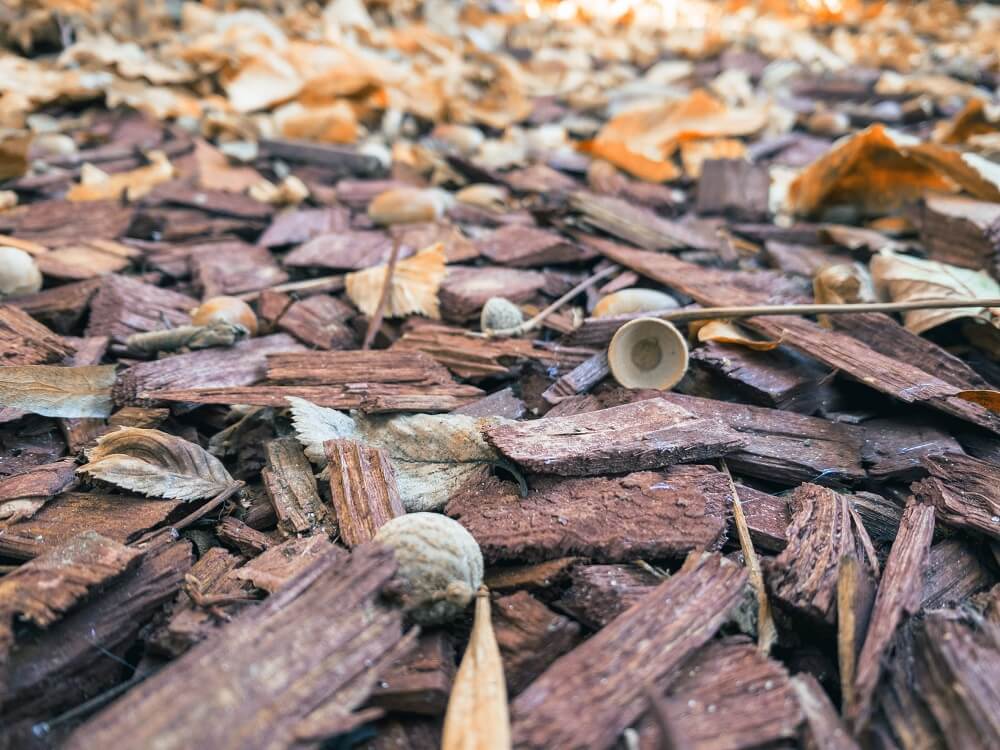
Organic mulch is supposed to rot. Bark, wood chips and shredded leaves break down from the bottom up into organic matter that feeds soil life and holds moisture. Raking that layer away throws out the part doing the most good.
The common worry is nitrogen. Linda Chalker-Scott of Washington State University reviewed the research in a 2007 paper about how mulches affect landscape plants, and the experiments she cited found no nitrogen shortage or slowed growth from woody mulch on the surface.
Nitrogen tie-up happens when soil microbes use nitrogen to break down woody material. With mulch on the surface, the effect stays in a thin layer where mulch meets soil. Wood mixed into the soil is a different story, and that is where plants turn pale and spindly.
One exception matters. Chalker-Scott advises against woody mulch in annual and vegetable beds, where shallow roots live in that top layer.
Measure Before You Buy a Single Bag
Push a ruler or an old plant label straight down until it meets real soil, and check three or four spots. Do it at the bed edge and again near the middle, because mulch drifts and settles unevenly.
Washington State University Extension lists target depths by material in its guide to garden mulches, and the right number depends on how coarse the mulch is.
- Compost in vegetable, flower and shrub beds, 1 to 3 inches.
- Shredded leaves, 2 to 3 inches.
- Chunk bark, 2 to 3 inches.
- Arborist wood chips, 4 to 6 inches, since the coarse pieces let air and water through.
- Straw in a spring vegetable garden, up to 8 inches, because it packs down fast.
The guide also says to keep organic mulch 6 inches from tree trunks. If your reading already meets the target, skip the new layer this year.
What Happens When Mulch Gets Too Deep
Topping off every year without measuring is how most beds end up buried. Fine bark settles a little each season, new mulch goes on at full depth, and within a few years the layer is twice what anyone intended.
Martha Smith of University of Illinois Extension explains in her piece on mulch volcanoes around trees that 2 to 3 inches is plenty for most landscape mulch. Past that point, trouble builds slowly.
- Roots run short of oxygen, and soil stays wet long enough to invite root rot.
- Mulch piled against a trunk keeps bark dark and damp until it rots, which opens the door to insects and disease.
- Trees respond by growing roots up into the mulch, and some of those roots circle the trunk and choke it over time.
Shallow-rooted trees such as maples take the worst of it, according to the Illinois article.
If your shrub turned brown after winter, check for live branches before you blame the mulch. Sun and wind may have caused winter burn.
When I Do Pull Old Mulch Out
I remove old mulch in four situations, and only the troublesome part. When the depth runs over the target, I rake off the excess down to about 2 inches and leave the rotted layer underneath alone.
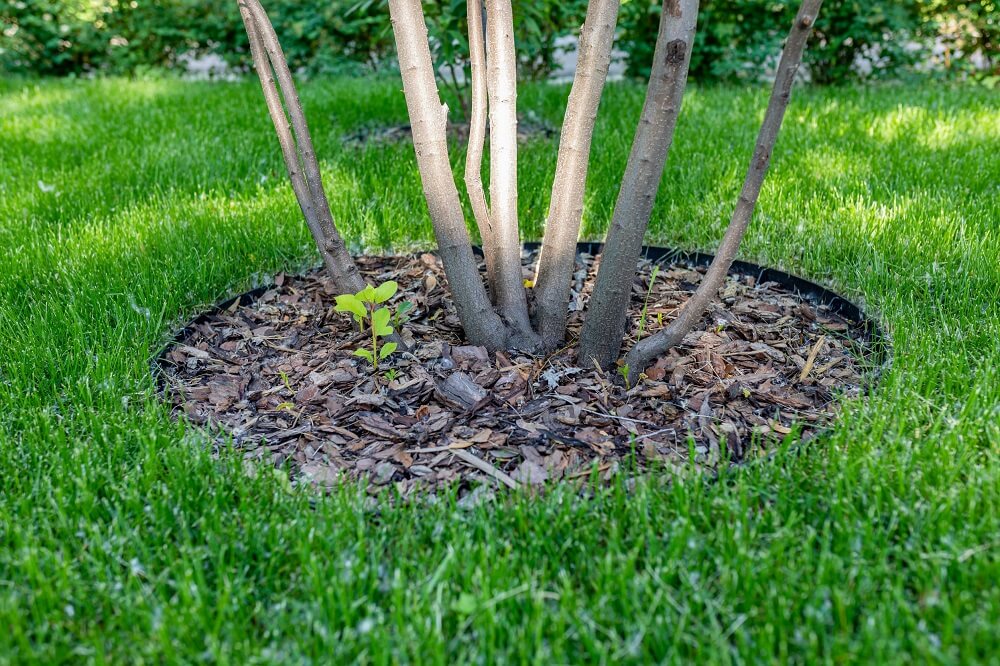
Matted mulch is the second case. Fine bark and finely shredded leaves can knit into a gray crust that sheds water, and a sour smell tells you the layer has gone airless. Breaking it up with a hand cultivator usually fixes it without removal.
Disease is the third. The University of Vermont Extension Master Gardener Helpline advised one gardener in 2025 to rake out mulch and leaves under plants with a disease that can overwinter. That old mulch goes in the trash, not the compost.
The fourth is anything touching a trunk, cane or stem. I pull it back by hand every fall, no matter how deep the rest of the bed is.
The Rose Bed That Taught Me to Measure
My first winter in this house, in 2008, I skipped mulching a bed of new roses and lost all six. For years afterward I overcorrected, topping that bed every spring without checking what was already there.
In Minnesota, volunteers go even further and use a trench method to protect tender roses through severe winters.
By the time I finally dug in, the bark was close to 7 inches deep at the center. The bottom 2 inches had packed into a wet, sour mat, and the mulch sat right up against the canes. Two replacement roses had thin, pale growth I had blamed on the weather.
I raked everything above 3 inches onto a path, broke up the mat with a cultivator and cleared a 6 inch ring of bare soil around each plant. The roses pushed out heavier canes the next June. That bed now gets an inch of new mulch only when the label test calls for it.
How Much New Mulch You Actually Need
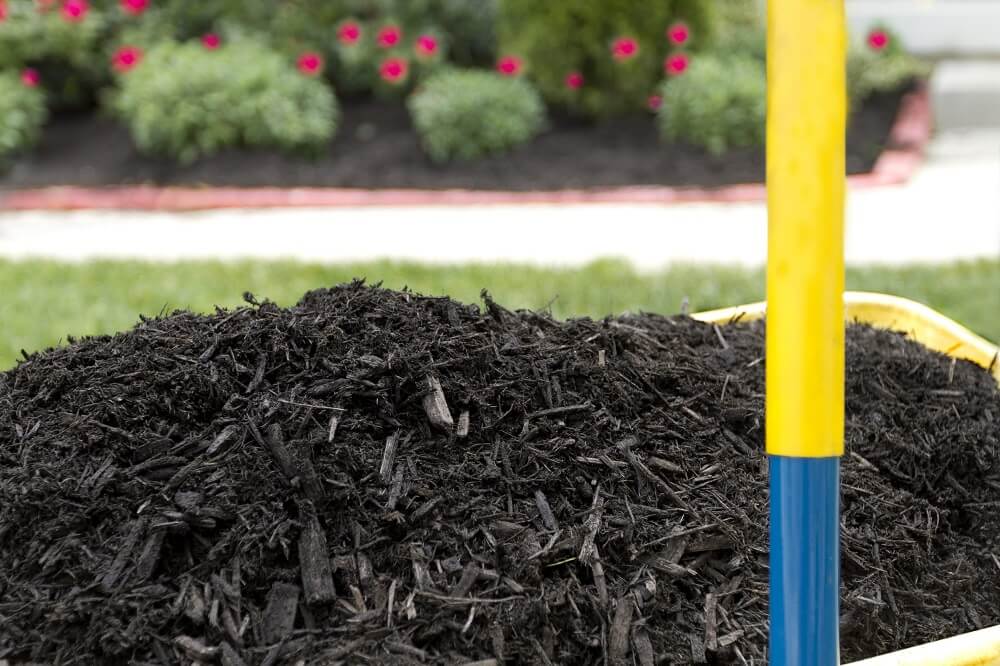
Measuring first saves real money, so I ran numbers for a 10 by 10 foot bed. One cubic foot of mulch covers 12 square feet at 1 inch deep, and most bagged mulch comes in 2 cubic foot bags.
| Depth you add to 100 square feet | Mulch needed | 2 cubic foot bags |
|---|---|---|
| 1 inch | About 8 1/3 cubic feet | About 4 |
| 2 inches | About 16 2/3 cubic feet | About 8 |
| 3 inches | 25 cubic feet | About 12 or 13 |
Most beds I check still hold 1 1/2 to 2 inches of old mulch a year after a fresh layer. Topping those up by 1 inch instead of a full 3 cuts the bag count by roughly two thirds. The math is my own simple volume calculation, so adjust it for your bed and bag size.
Fall Mulch Is Not the Same as Winter Mulch
Topping up bed mulch in mid-October is fine. Piling winter protection over perennials now is not. Bruce Spangenberg of UW-Madison Extension writes that winter mulch should wait until plants are fully dormant, and he suggests Thanksgiving as the usual timing in Wisconsin, ideally just as the soil starts to freeze.
He favors straw, marsh hay and evergreen boughs and warns that leaves can mat and smother plants. I wait for frozen ground for another reason too, because early mulch gives voles a warm spot right beside the crowns.
For the proper order of late-fall garden tasks, see how I prepare my garden for winter, including soil protection and perennial care.
What to Check This Weekend
Take a ruler or a plant label out to every mulched bed before you buy anything. Write down the depth in three spots per bed.
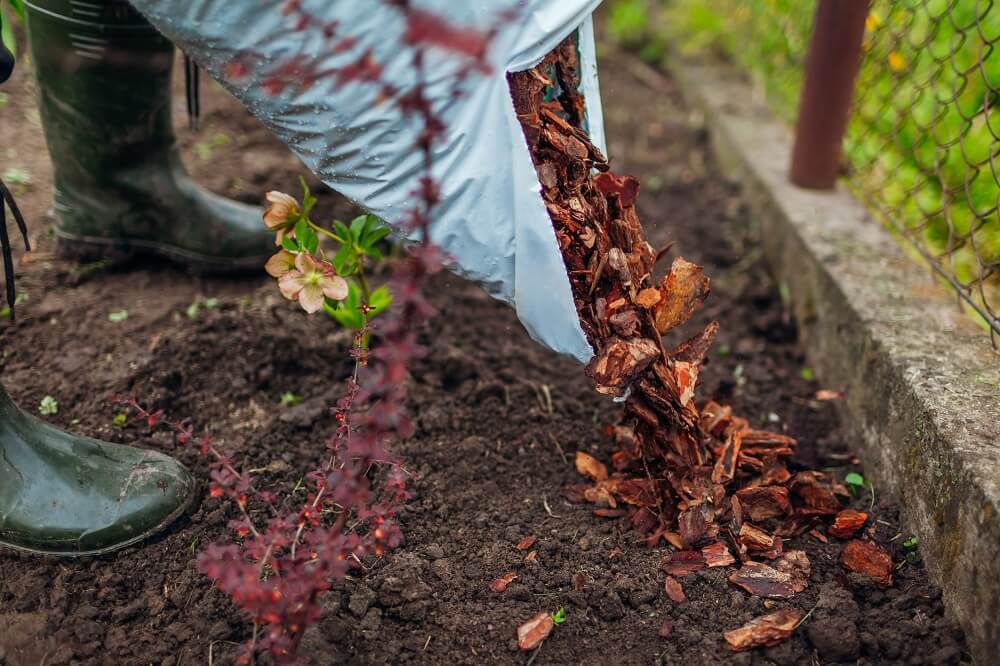
Where you find less than 2 inches, add enough to reach 2 or 3. Where you find 4 inches or more of fine bark, rake the extra onto a path and leave the bottom layer in place. Pull mulch back 6 inches from every trunk and cane while you are down there.
Bag any mulch under plants that had leaf spot or blight this year. Then leave the straw in the garage until the soil freezes, probably around Thanksgiving.