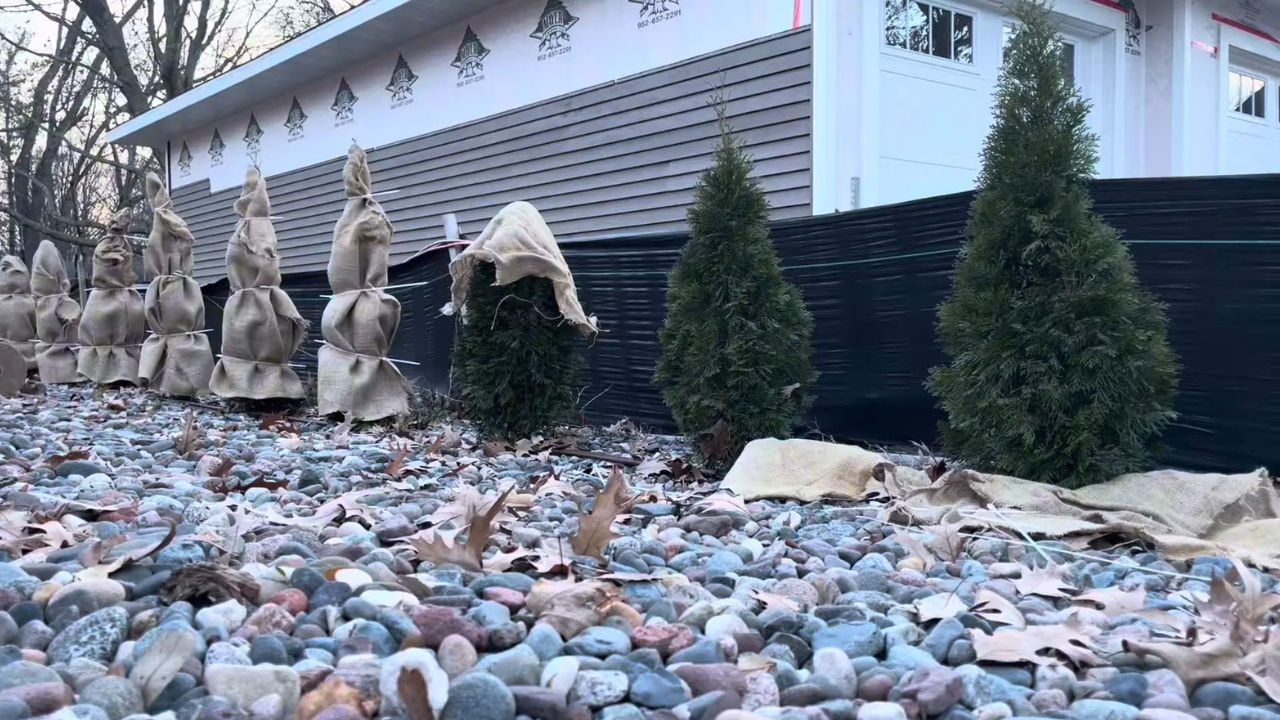
If you are reaching for a roll of burlap this fall, put it on stakes, not on the shrub. A burlap fence set a couple of feet out from an evergreen blocks the drying wind and harsh sun that cause winter burn.
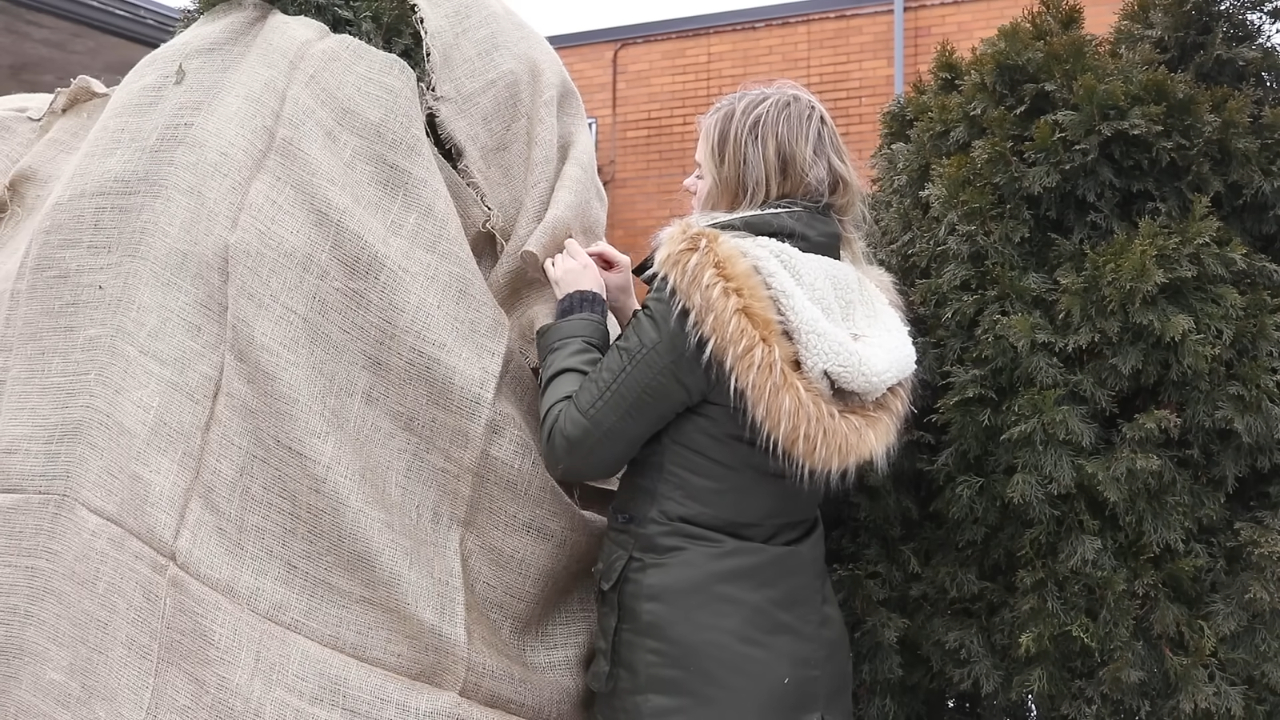
A burlap wrap pressed against the branches does far less, and it can cause new problems by holding ice and moisture against the foliage all winter.
The fence takes about the same amount of burlap and only a little more work, and you can check on the plant all winter without unwrapping anything.
What Goes Wrong When You Wrap Burlap Tight
Wrapping feels protective, like putting a coat on the plant. The trouble is that an evergreen is not cold the way a person is. It is losing water through its needles on sunny, windy days while frozen roots cannot replace it.
The University of Wisconsin guide to winter burn warns against tightly wrapping individual plants for exactly that reason.
Here is what a snug wrap does instead.
- It soaks up rain and melting snow, then freezes stiff against the branches.
- It holds damp air around the foliage, which encourages fungal disease.
- It cuts the light evergreens still use on mild winter days.
- It hides chewed bark, broken stems and other problems until spring.
None of that happens with a fence, because air moves freely between the burlap and the plant.
Why a Fence Blocks Wind Better Than You Might Expect
View this post on Instagram
Farmers have studied windbreaks for decades, and the findings scale down nicely to a backyard. Research summarized by the USDA National Agroforestry Center shows that a barrier slows wind most in a zone two to five times its own height on the downwind side.
Apply that to a burlap fence 4 feet tall. My rough math puts its strongest shelter about 8 to 20 feet behind it. Wind also slows right behind the fence, so a shrub 2 feet back sits in sheltered air, and one fence can protect a short row.
The same USDA research found that gaps in a windbreak act like a funnel and speed the wind up as it squeezes through. A burlap fence with a loose seam or a missing corner can send a stronger blast at your shrub than no fence at all.
So overlap every seam and close the corners.
Wrap or Fence, Side by Side
Both use the same roll of burlap, but they work in very different ways. The table compares them over a typical winter.
| Question | Burlap wrap | Burlap fence |
| Blocks drying wind | Partly | Yes |
| Lets air move around foliage | No | Yes |
| Traps ice and moisture | Often | Rarely |
| Lets light reach the plant | Little | Yes, through the open top |
| Easy to check the plant | No | Yes |
| Reusable next year | Often torn | Usually |
The fence wins on almost every line. Its one drawback is setup, since you need stakes and a hammer instead of a ball of twine.
Illinois Extension notes that even a wrap should be breathable and left open at the top, and never made from plastic. If you already own the burlap, the fence costs you only the stakes.
How to Build a Burlap Fence
Drive the stakes before the ground freezes, even if you hang the burlap later. Once the soil is frozen, pounding stakes is miserable work.
- Pick the exposed sides. Most damage comes from the south, southwest and west, so start there.
- Set wooden stakes or metal fence posts 4 to 5 feet tall about 2 feet outside the drip line, the outer edge of the branches.
- Space the stakes 3 to 4 feet apart so the burlap does not sag.
- Staple or tie the burlap to the windward side of the stakes, so wind presses it against them.
- Overlap each seam by at least 6 inches and wrap the ends around the corner stakes.
- Leave the top open and keep the bottom edge a few inches above the soil.
For a tall shrub, the fence should stand about as high as the plant.
Which Evergreens Actually Need One
Most established evergreens get through winter fine without any burlap at all. I save fences for plants with a real reason to need them.
- Evergreens in their first or second winter, before the roots spread far enough to keep up with water loss.
- Broadleaf evergreens such as boxwood, rhododendron and holly, which lose water through wide leaves.
- Any evergreen on a sunny, windy south or west wall, or within reach of road salt spray.
Small shrubs that stay under snow most of the winter rarely need help, since snow shields them from sun and wind. Evergreens in containers are a different case, because roots in a pot freeze much faster than roots in the ground.
A fence will not fix that, and the advice on leaving pots outside all winter covers better options, such as burying the pot or moving it into an unheated garage.
When a Wrap Still Makes Sense
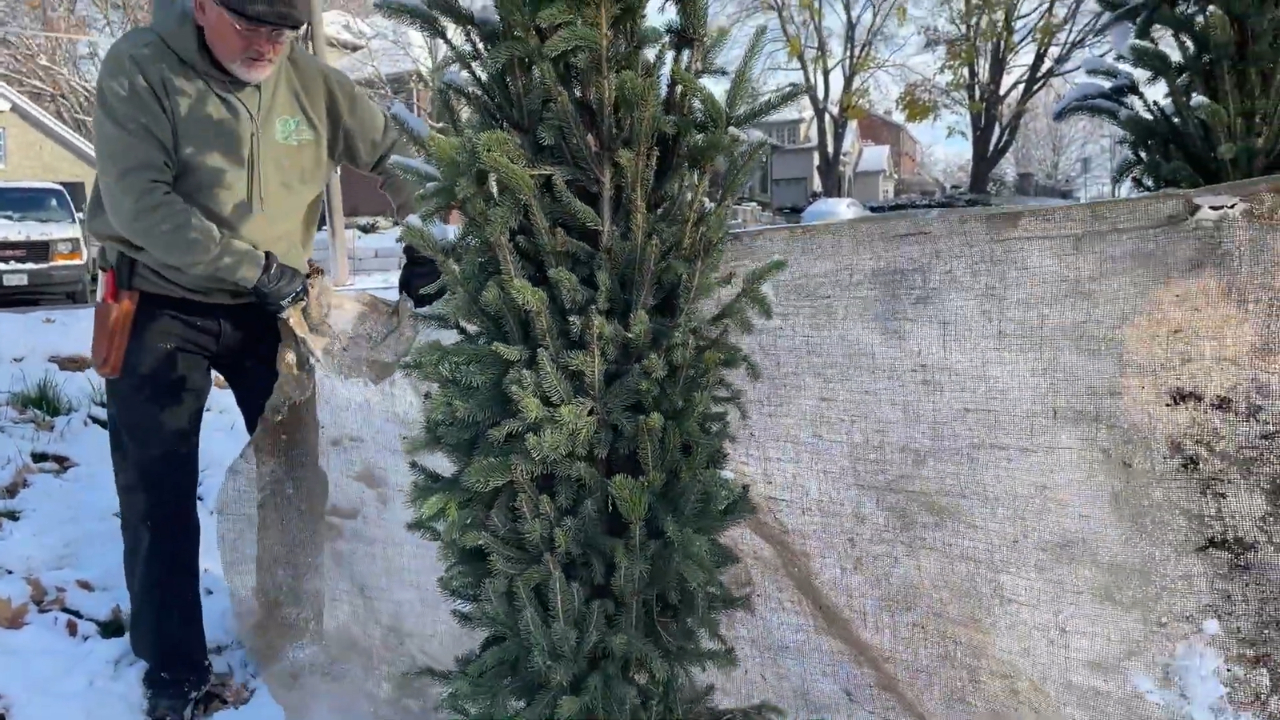
Tall, multi-stemmed shrubs like arborvitae can splay open under heavy snow, and tying the stems together keeps them upright. That job calls for twine or soft rope spiraled loosely around the plant, not a sheet of burlap.
Deer are the other exception. A Michigan extension expert answering an Ask Extension question on arborvitae care noted that a burlap wrap can also discourage deer browsing. If deer strip your shrubs every winter, a loose wrap that leaves the top open may be worth the tradeoff.
Did You Know?
A wrapped shrub is not warmer. Gardening writer Robert Pavlis tested a yew wrapped in several layers of burlap and found the air inside matched the air outside, even on a record cold day. It was one test on one shrub, not a formal study, but it shows why a wrap is the wrong tool for cold.
Taking the Fence Down in Spring
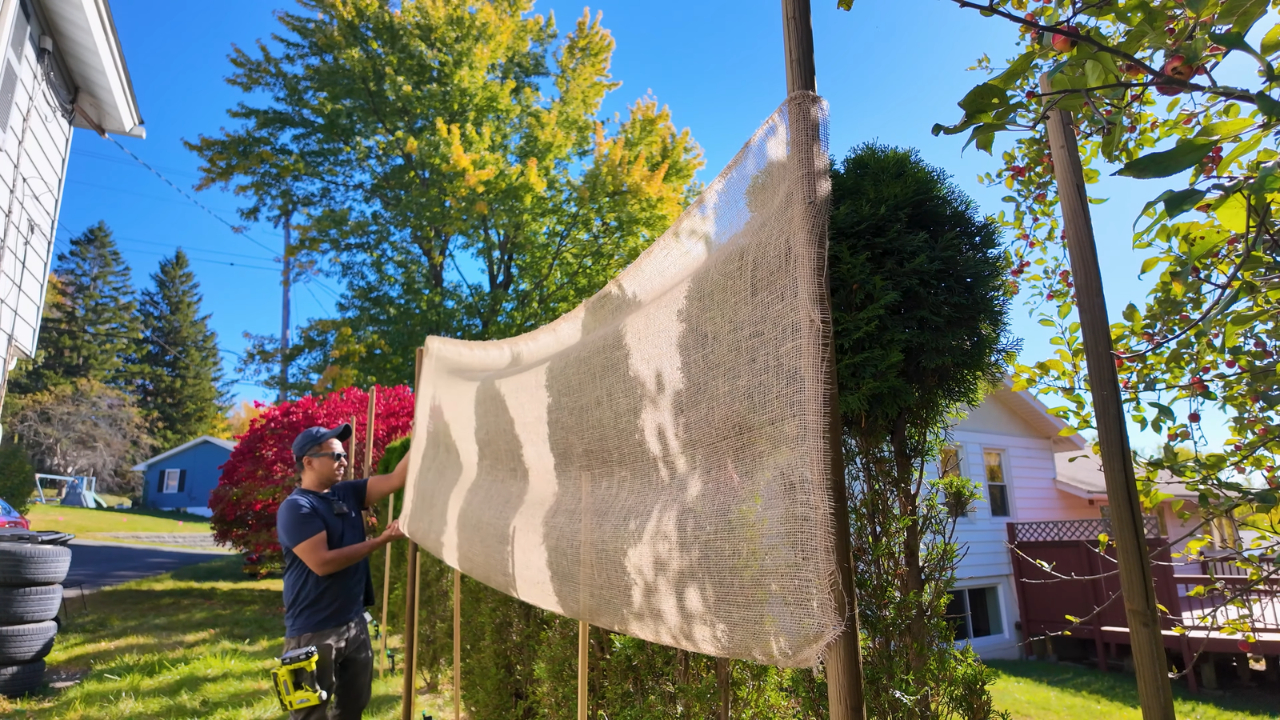
Take the burlap down promptly in spring, once the ground thaws and the worst of the drying wind is over. Wisconsin Extension advises prompt removal, and in zone 5 that is often early April. In warmer zones, take it down a few weeks sooner.
A few habits make next fall easier.
- Pull the stakes or tap them down flush so they do not catch the mower.
- Let the burlap dry completely on a sunny day before you fold it, or it will rot in storage.
- Store it in a lidded plastic tote, since mice treat folded burlap as nesting material.
Once the fence is down, check the soil around the shrub. The root zone usually needs fresh mulch after winter.
Important Questions to Ask
1. Can I use plastic or landscape fabric instead of burlap?
Skip plastic. It traps heat on sunny days and moisture at night. Canvas or slatted snow fencing works, since both let some air through.
2. How long does burlap last?
Plain jute burlap breaks down in sun and weather. Expect a few seasons from a fence and fewer from a wrap, which rubs against branches.
3. Does a burlap fence help with road salt?
Yes. A screen on the road side catches salty spray from passing cars before it reaches the foliage.
4. Do I still need to water if I put up a fence?
Yes. Water evergreens deeply until the ground freezes. A fence slows water loss, but a dry shrub still goes into winter short.
5. Should I spray an antidesiccant instead?
Antidesiccants break down quickly and need repeat applications after rain or snow. Wisconsin Extension says they offer limited benefit.
What to Do This Week
@gertens Brad shares the best methods to protect your evergreens that are prone to winter burn! Part-1 #gertens #gardencenter #treecare #winterizing #trees ♬ Morning with U – Tollan Kim
Walk around your evergreens this week and note which ones face south or west, sit near the road or went into the ground this year.
For each one, drive four stakes about 2 feet outside the branch tips while you can still push them into the soil. Buy enough burlap to wrap three sides with a 6-inch overlap at every seam.
Water those plants deeply one more time. You can staple the burlap on any dry afternoon before the first hard cold snap, and the plant will spend the winter in calm air instead of a damp sleeve.