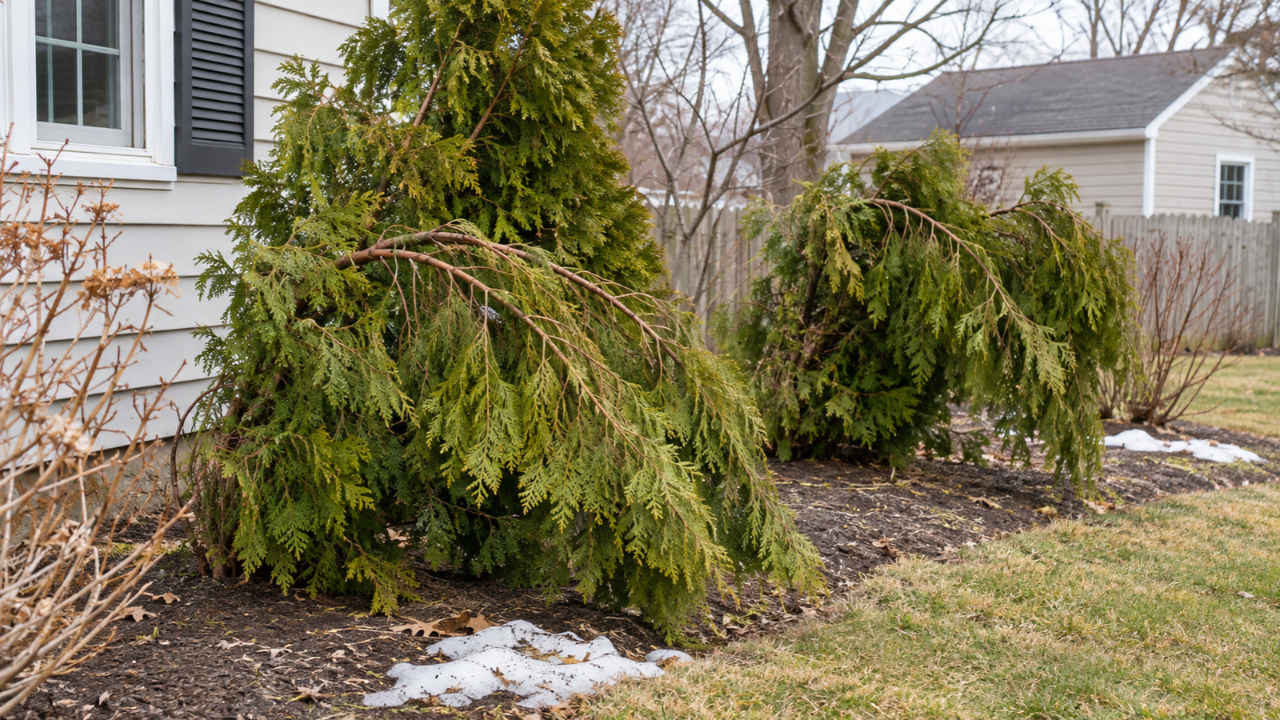
Most arborvitae that bent under snow will stand back up on their own if nothing inside them broke.
The branches are flexible, and a few weeks of spring growth often pulls them most of the way back. Your job right now is to look closely, not to grab rope. Check each plant for cracked or snapped wood, give unbroken branches until early summer, and tie back only the ones that stay bent.
Wait too long, though, and the plant settles into its new shape for good. Most of the real work happens in early summer, not the week the snow melts.
Why Arborvitae Bend When Other Evergreens Do Not
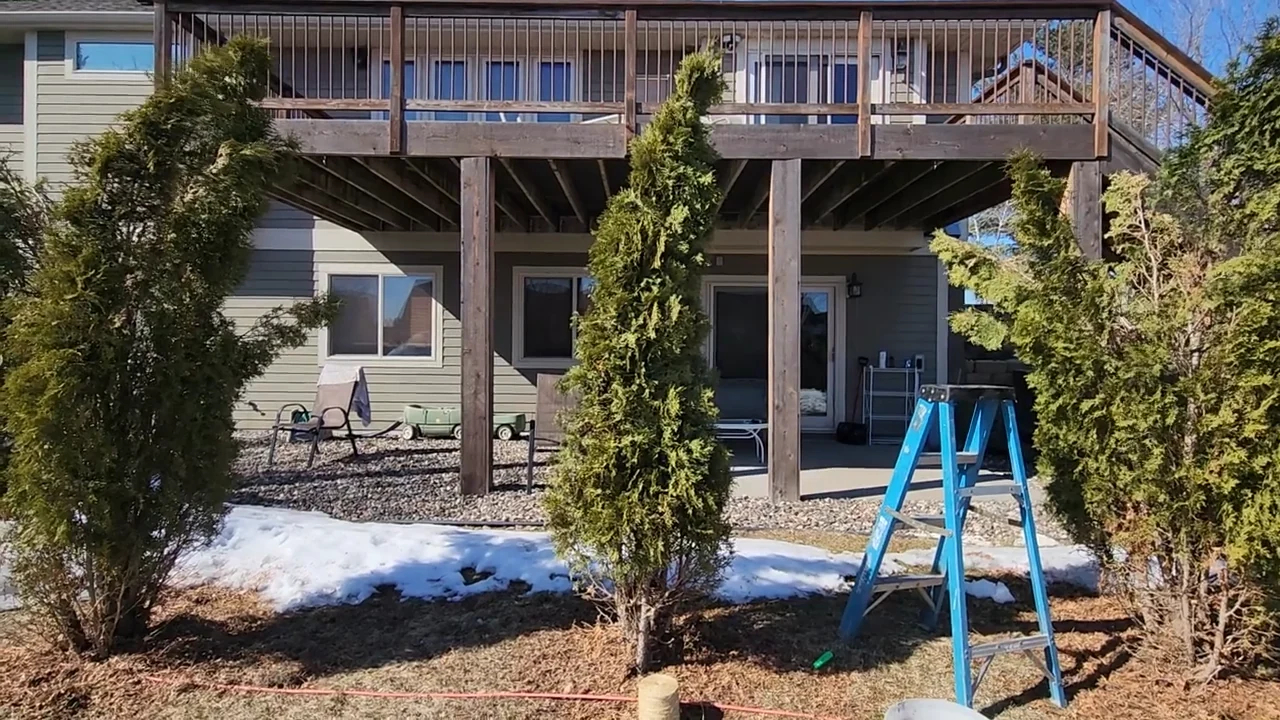
An arborvitae is not one trunk with side branches. Most upright types grow several long stems, called leaders, from near the base, all bundled into one narrow column.
Heavy, wet snow settles into the top of that column and pushes the stems apart, so the plant splays open like a bouquet. A spruce sheds snow off its stiff, layered branches, while an arborvitae holds it.
A few conditions make the bending worse.
- Wet, heavy snow weighs far more than dry, fluffy snow.
- Tall, narrow varieties catch snow at the top, where it has the most leverage.
- Plants under a roof edge get hit by sliding snow, which can flatten them in seconds.
- Snow shoveled off a driveway onto a hedge adds weight the plant was never built to carry.
Check for Broken Wood Before Anything Else
Bent and broken are different problems with different fixes. Walk around each plant, part the foliage and look at where the stems meet near the base. Match what you find to the table.
| What you see | What it means | What to do |
| Stems bowed outward, bark intact | Bent, not broken | Wait, then tie if needed |
| Bark torn along one side of a stem | Partly broken | Inspect closely before cutting |
| Stem snapped through | Broken | Prune below the break |
| Trunk split at the base | Major damage | Usually replace |
| Whole plant leaning, roots lifted | Root damage | Stake young plants, judge old ones case by case |
Torn bark deserves the most care. PBS Wisconsin, citing UW horticulture specialists, warns that hasty pruning can tear the bark further, and that torn branches are prone to decay. If more than half the plant has broken stems with damage at the base, remove the whole plant.
Give Unbroken Branches Time to Spring Back
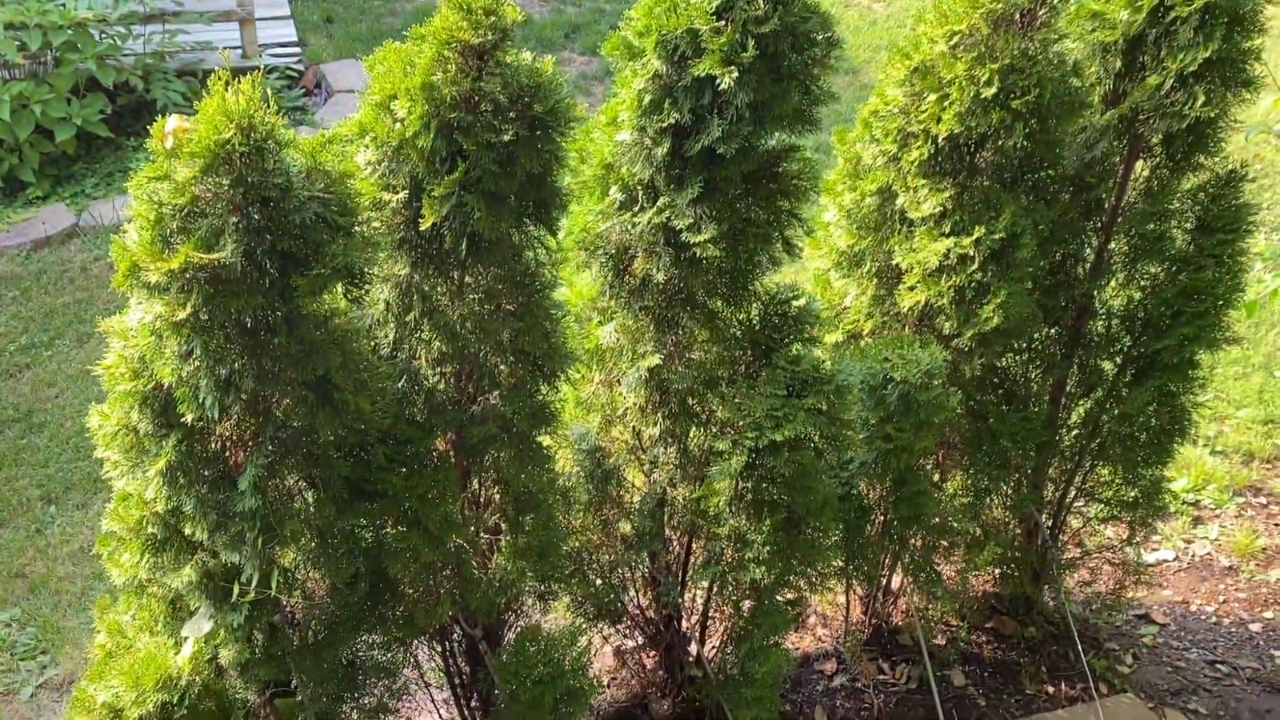
Bent branches often recover by themselves over weeks or months. Iowa State Extension advises patience and suggests retraining only branches that stay bent into early summer. Tying too early can snap a stem that was already starting to lift.
Advice differs on this point. Dane County Extension in Wisconsin wrote in April 2024, after a late heavy snow, that a full recovery without help was doubtful that late in the season.
Both views fit together. Late snow leaves less growing time, so the later your bending happened, the sooner you should step in.
Did You Know?
A leaning arborvitae starts adapting within months. It lays down denser wood, called reaction wood, on one side to hold its new position, and new roots grow to match.
In one Ask Extension case about leaning arborvitae, an expert advised against pulling trees upright after about eight months for exactly that reason.
How to Tie a Bent Arborvitae Back Into Shape
If a plant is still splayed open in early summer, pull the stems back together gently. Work on a mild day, never when branches are frozen, because cold wood snaps easily.
- Pick a soft, wide material, such as 4-inch burlap strips, canvas straps or old pantyhose. Skip wire and rubber hose, which can girdle bark.
- Start low. Wrap the strip around the outer stems about one third of the way up and draw them in slowly.
- Add a second tie about two-thirds of the way up.
- Snug each tie only until the stems touch.
- For a whole plant that leans, tie soft rope above and below the bend and anchor it to a stake in the ground.
A Michigan extension expert answering an Ask Extension question about snow-bent arborvitae suggests leaving a ground anchor for at least six months, with no guarantee it works.
When Pruning or Replacing Makes More Sense
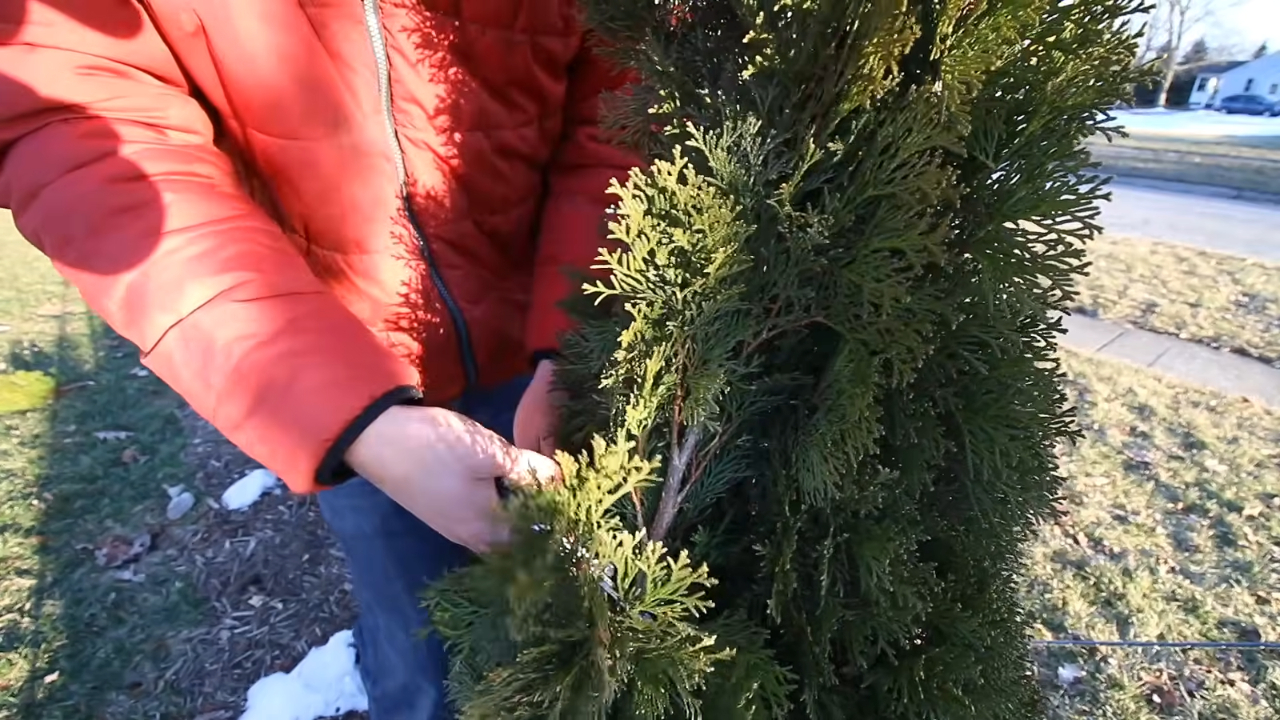
Some damage will not respond to ties. A plant can live with a crooked trunk, so decide based on safety and how much the look bothers you.
- Prune snapped stems with a clean cut below the damaged section, back to healthy wood.
- Replace any plant split down the trunk or flattened to the ground with base damage.
- Call a certified arborist if the bend sits higher than you can reach from a small stepladder.
If you replace a hedge plant, think about the spot first. A site under a roof edge will keep flattening narrow evergreens, so a deciduous shrub that drops its leaves may be the better choice there.
While there are still plenty of plants you can put in the ground in October, broadleaf and needled evergreens are usually better left until spring.
Take the Ties Off Before They Do Damage
Ties that help in year one can kill a branch by year three. Iowa State, UW specialists, and Michigan Extension experts all give the same limit, which is two growing seasons at most. Stems grow thicker each year, and a strap that fit loosely in June starts pressing into the bark.
Girdling happens when a tie, wire, or strap squeezes a stem as it grows. The pressure cuts off the thin living layer just under the bark that carries water and food, and everything above the tie slowly starves.
Check every tie each spring and loosen any that have started to dig in. If the stems still flop open after two seasons, they probably will not hold on their own, and pruning or replacement is the better route.
Keep It From Happening Next Winter
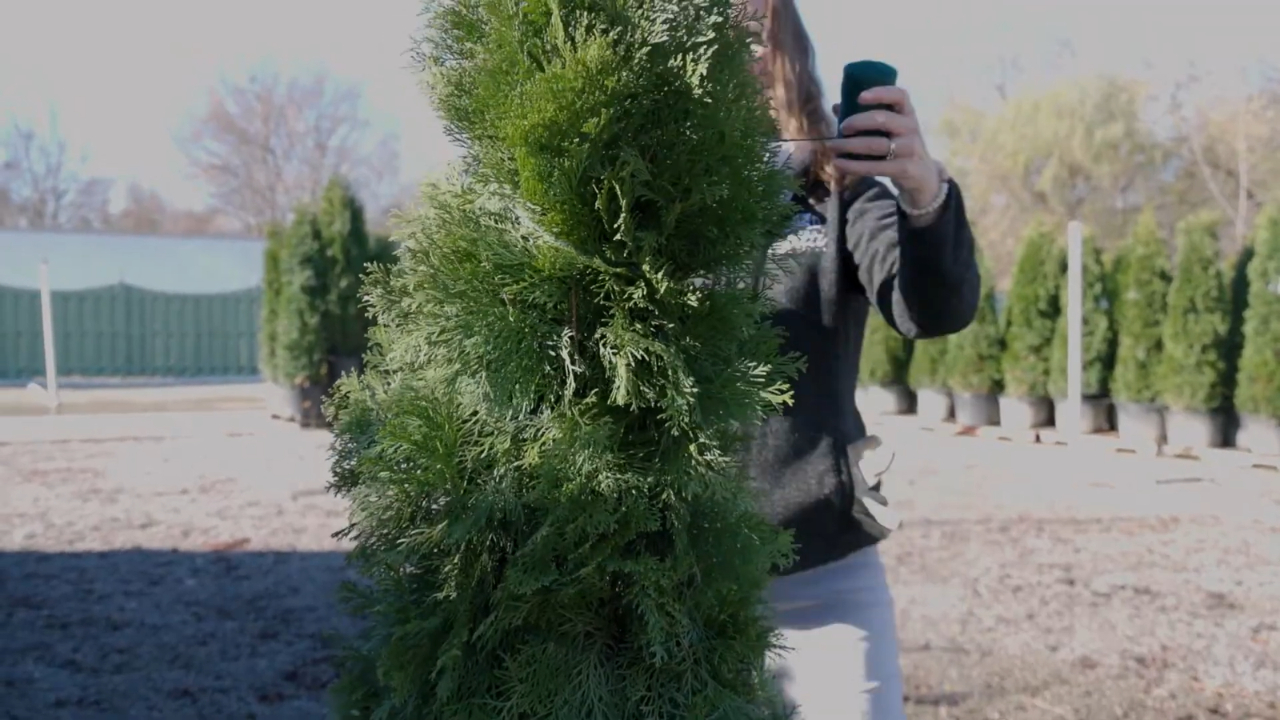
Prevention works best right after the first hard frost. Wrap twine or soft rope in a loose spiral from the base to the top so the stems stay together and form a cone that sheds snow.
Use the same soft materials you would use for retraining. Iowa State suggests removing the wraps once heavy snow risk passes, typically mid to late April in Iowa.
After each storm, gently shake or tap the branches so snow slides off. Sources disagree on sweeping direction, since Iowa State suggests upward strokes and a Michigan expert warns against them, so I skip sweeping and just jostle.
Never shovel snow onto a hedge. Water evergreens deeply until the ground freezes, too, because well-watered plants handle winter stress better.
Important Questions
1. Will cutting off the top make my arborvitae stand straighter?
No. Topping leaves a flat, stubby look, regrows a new leader slowly and can make the plant more likely to split under future snow.
2. Do bent branches leave a permanent gap in the hedge?
Retrained branches keep growing and usually close the gap. Arborvitae rarely sprout new foliage from old, bare interior wood, so stems you cut away are not replaced.
3. Should I knock ice off my arborvitae?
No. Hitting iced branches with a broom causes more breakage. Do not push them upright either. Let the ice melt naturally.
4. How long should a stake stay on a young leaning arborvitae?
Leave it for at least one full growing season. Fasten the main stem to the stake with a wide canvas strap so it does not rub the bark.
What to Do This Week
View this post on Instagram
If your arborvitae are still bent from last winter, go out this week and check each one for split trunks and snapped stems.
Prune clean breaks, loosen any old ties that have started to bite, and decide which plants need replacing next spring. Then get ahead of the coming snow.
After the first hard frost, spiral soft twine around each column from bottom to top, and keep a roll of burlap strips in the garage for storms.
Mark your calendar for mid to late April, or a few weeks sooner in warmer zones, when the wraps come off and new growth needs room to move.