Last week the first frost turned my basil black, and by lunchtime a neighbor had asked whether planting season was over. In my zone 5 yard outside Madison, it is not.
Frost ends the season for tender leaves, but the soil stays warm enough for roots well into November. October is when my garlic goes in, along with tulips, daffodils, and a few clearance perennials I cannot resist.
Below is what still goes in the ground after the first frost, the deadlines I follow, and the plants I now hold back until spring.
Frost Is Not the Real Deadline
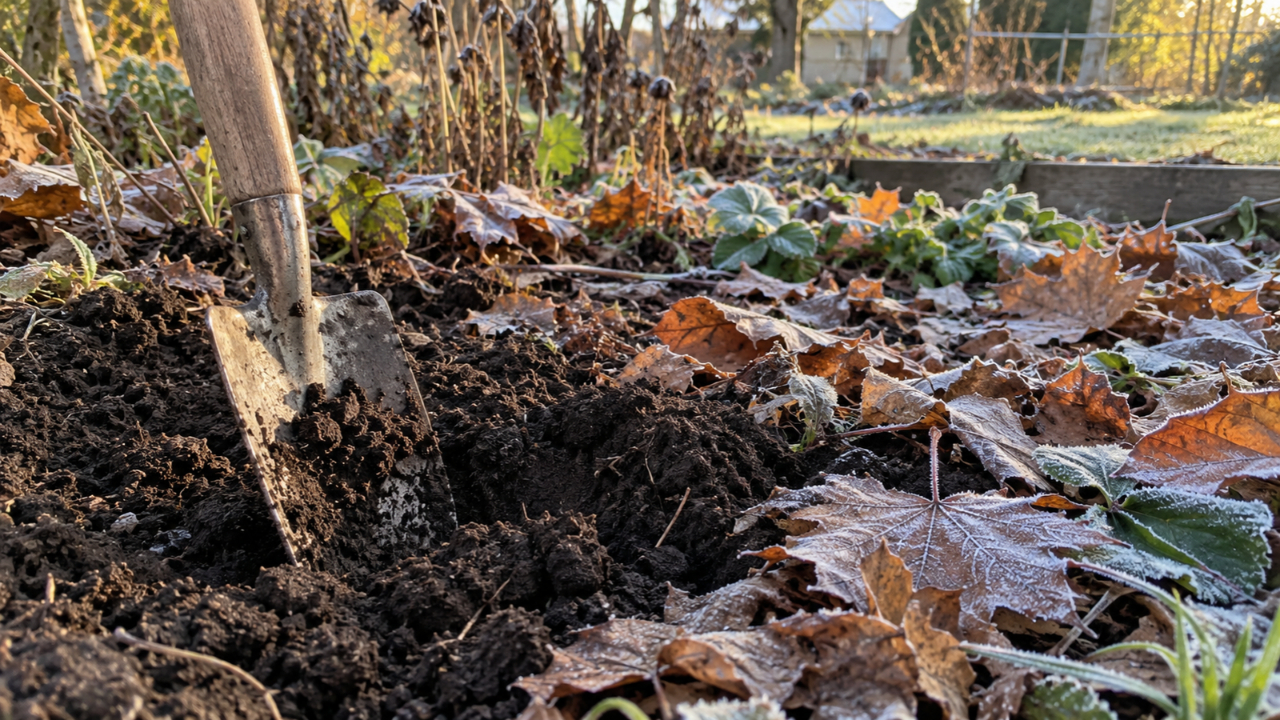
Air cools quickly in fall, while soil gives up its summer heat slowly. Roots keep growing as long as the soil is unfrozen, even after frost has killed the leaves above them.
Illinois Extension horticulture educator Austin Little makes the same point in his advice on establishing perennials in fall, noting that soil holds heat longer than air.
The deadline that matters is frozen ground. My garden notebook shows the top few inches of soil usually freeze for good in early December, which gives October plantings about six weeks of root growth.
First frost, hard freeze, and frozen ground are three separate events. Frost damages tender leaves. A hard freeze, usually defined as 28°F or colder, kills most annuals and tender vegetables. Frozen ground stops root growth and marks the true end of the planting season.
What I Still Plant After the First Frost
Here is my October planting list with the deadlines I use in zone 5. Depths and timing come from extension guidance, and the last column shows where each one goes in my own yard.
| Plant | Plant by (zone 5) | Depth or rate | In my yard |
| Garlic | Late October to early November | 2 to 4 inches deep, 5 to 8 inches apart | One 4-by-8-foot raised bed |
| Tulips, daffodils, crocus | Until the soil freezes | 2 to 3 times the bulb width | Front walk and under the apple trees |
| Cereal rye cover crop | Mid-October | 4 to 5 pounds per 1,000 square feet | Empty vegetable beds |
| Deciduous shrubs, potted perennials | Six weeks before the ground freezes | Root flare level with the soil | Borders, by mid-October |
| Dormant grass seed | Soil below 40°F, early November on | 10 to 20 percent extra seed | Thin spots by the driveway |
| Native prairie seed | November through March | Scattered on the surface | Bare patches in the prairie strip |
The safest choices are plants that want the cold. Spring bulbs and many native wildflower seeds need a winter chill to bloom or sprout. Shrubs and perennials gain nothing from cold and simply need enough roots to hold on until spring.
Garlic sits in between. Fall planting gives it time to root before winter, and earlier planting is linked to better yields the following summer.
Garlic Goes In First
Garlic is the one crop I plant every October without fail. I grow hardneck types, mostly ‘Music’ and ‘Chesnok Red’, because they handle cold better than softneck garlic, as the UW-Madison Extension guide to planting garlic in Wisconsin explains.
- Break bulbs into cloves on planting day and keep the largest ones. Small cloves go to the kitchen.
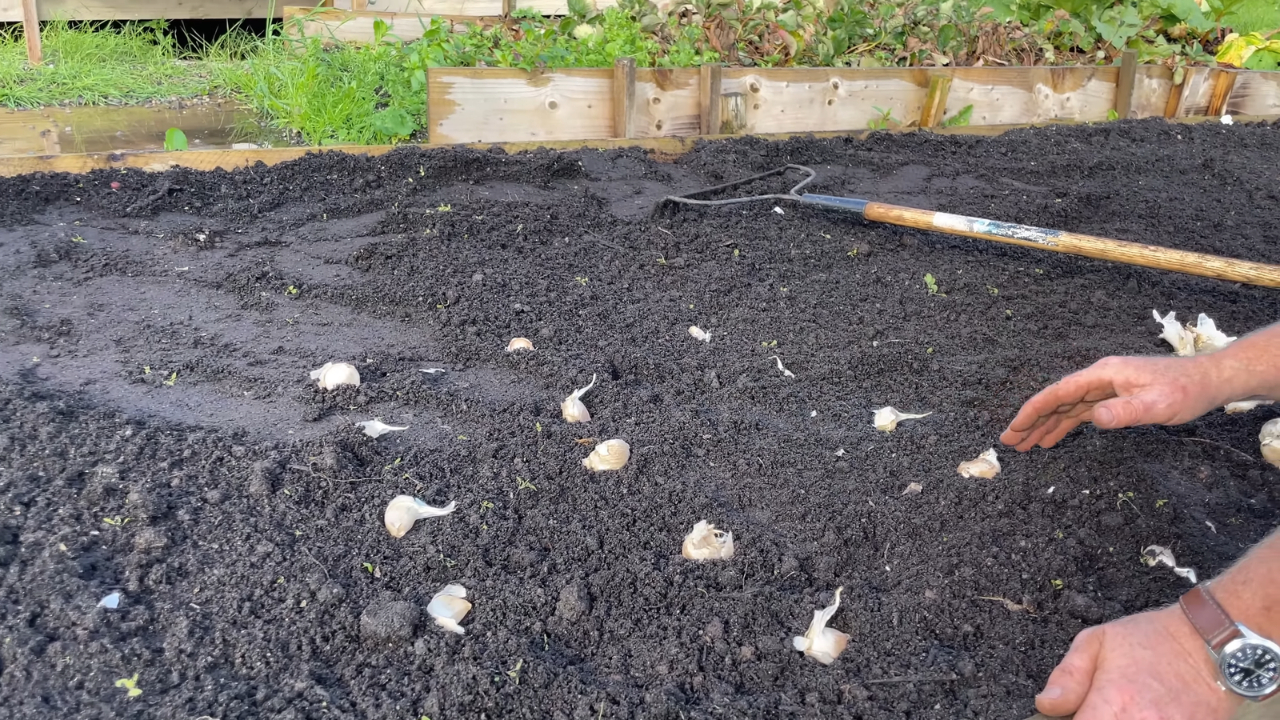
- Set each clove pointy end up, 2 to 4 inches deep. In my loose raised-bed soil, 3 inches works well.
- Space cloves 6 inches apart in every direction.
- Cover the bed with 3 to 4 inches of clean straw, then water it in.
At 6-inch spacing with a 6-inch margin along the edges, my 4-by-8-foot bed holds 7 rows of 15 cloves, or 105 in total. Each clove becomes one bulb next July, which covers a year of cooking plus the cloves I replant.
Bulbs Can Go In Until the Ground Freezes
View this post on Instagram
Spring bulbs are the most forgiving October planting. University of Minnesota Extension’s final fall to-do list says bulbs can still go in as long as the soil is workable, and in most years I am still planting tulips the week before Thanksgiving.
My routine follows a UW-Madison Extension article on planting hardy spring bulbs.
- Dig 2 to 3 times as deep as the bulb is wide, so a 2-inch tulip sits 4 to 6 inches down.
- Mix compost into the hole, but skip fertilizer at planting.
- Water once, thoroughly, to start root growth.
- Choose daffodils where squirrels roam. In my yard they dig up tulips and leave daffodils alone.
- After the ground freezes, cover the bed with 2 to 3 inches of chopped leaves.
Shrubs and Perennials Need More Caution
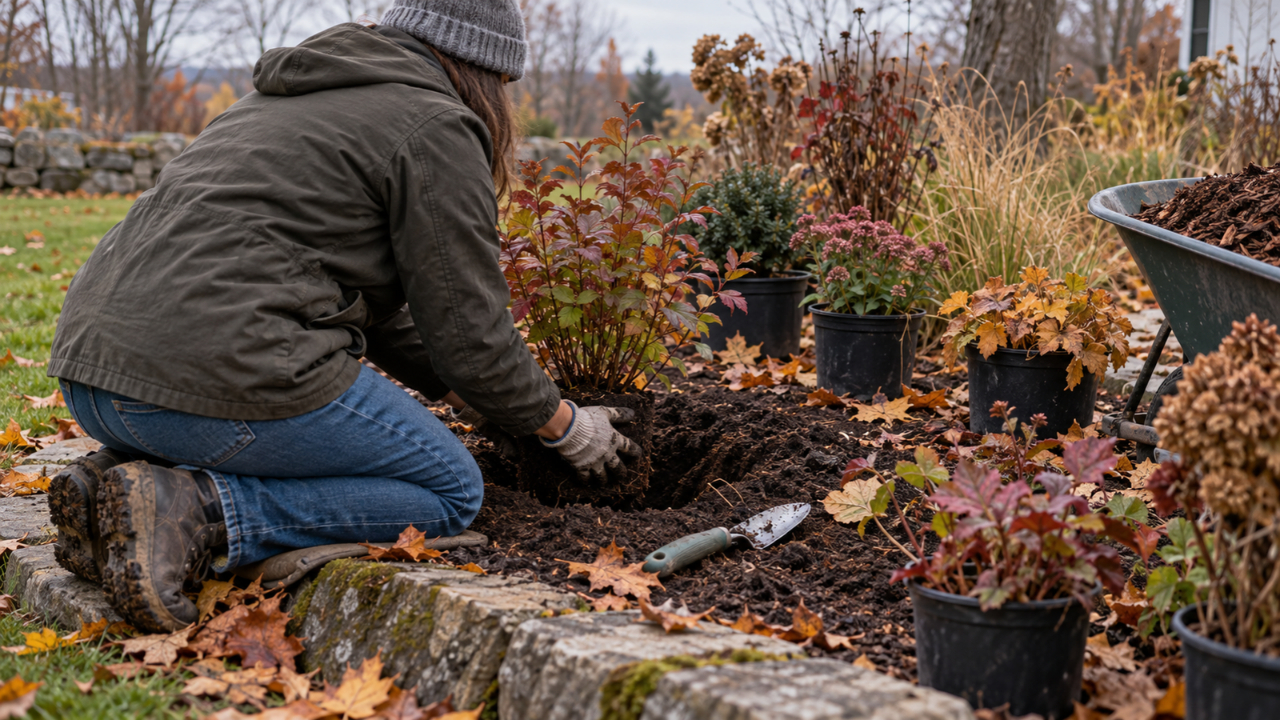
Clearance sales make October risky. At the garden center, perennials were marked half off by mid-October, and customers filled carts with them. I did the same in 2015 and planted a dozen coral bells on Halloween weekend.
By March, freezing and thawing had pushed eight of them half out of the soil, roots exposed.
That experience changed how I protect coral bells through winter, especially when their shallow roots have little time to establish before the ground freezes.
Now I follow the six-week rule from the UMass Extension fact sheet on fall planting, which says plants need at least six weeks to establish before the ground freezes. In my yard, shrubs and potted perennials go in by mid-October.
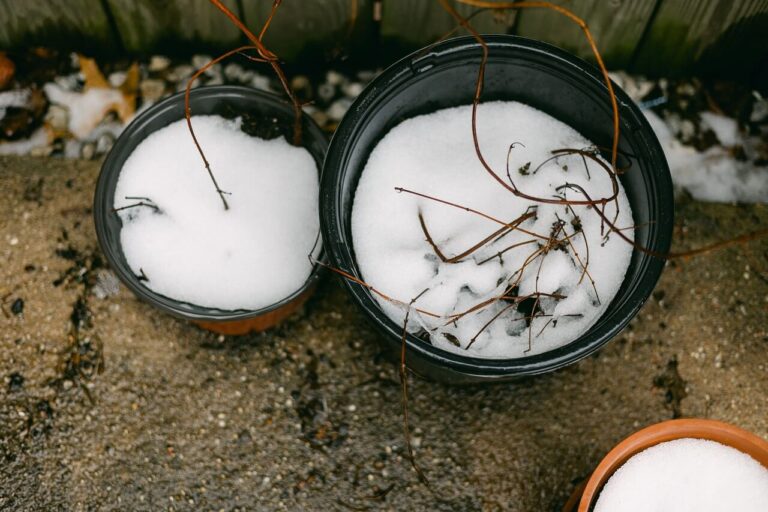
Anything bought later spends winter with its pot buried in a vegetable bed and moves to its real spot in April.
Watering note. Water new plantings thoroughly and as needed until the first hard frost, then stop, as Illinois Extension advises. Save fertilizer for spring.
Empty Vegetable Beds Get a Cover
None of my raised beds sits bare over winter. Cereal rye is the only cover crop I sow this late, because unlike oats it survives freezing. Illinois Extension recommends it for early October sowing at 4 to 5 pounds per 1,000 square feet in its guide to cereal rye as a garden cover crop.
My three beds without garlic total 96 square feet. At 4.5 pounds per 1,000 square feet, that works out to about 7 ounces of seed.
- Sow by mid-October in zone 5. Later than that, I mulch with shredded leaves instead, because late rye barely establishes in my beds.
- Rake the seed in lightly and water if no rain is forecast.
- Cut it down about two weeks before spring transplanting, then turn it under.
The rule for leaves before snow is different on lawns. A thin layer of shredded leaves can stay, but thick mats increase the risk of snow mold.
Seeds That Sleep Until Spring
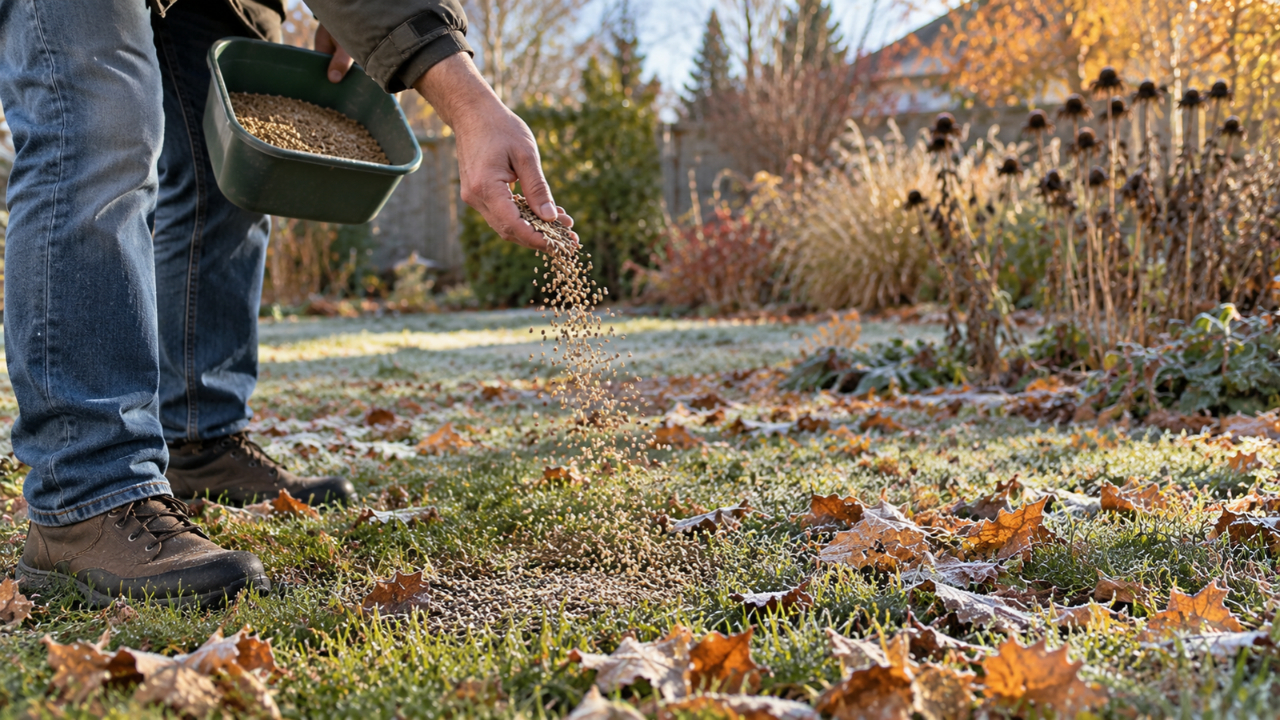
Some seed is meant to go out after the ground cools. According to University of Minnesota Extension guidance on dormant seeding, lawn seed can be spread once the soil drops below 40°F, typically early November to mid-March in Minnesota. Freezing and thawing work the seed into the soil, and it sprouts as spring warms up.
Before I add seed to brown patches in my lawn, I check the crowns. Dormant grass may recover without new seed.
My prairie strip gets the same treatment. Each November I scatter seed collected from my own coneflowers and little bluestem over any bare patches. Raking is not needed, since snow and thawing press the seed down for me.
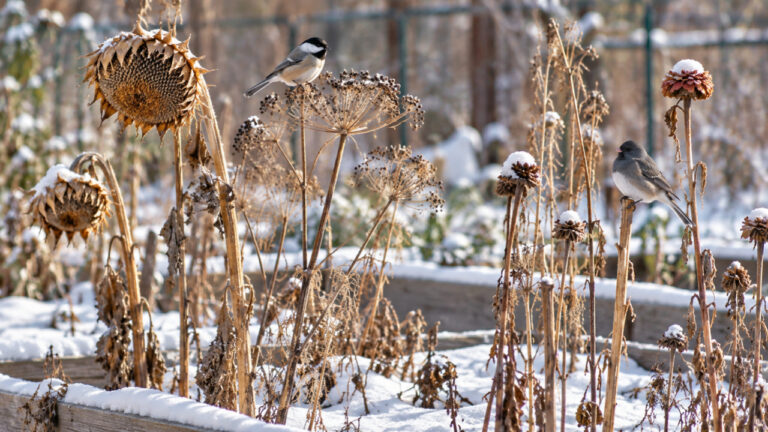
I save some coneflower seeds for new plants and leave the rest on their stalks for birds. Coneflowers are among the six things I leave in my vegetable garden for winter birds.
Did You Know?
Many native wildflower seeds need winter freeze-thaw cycles to break dormancy. Purdue Extension wildlife specialist Jarred Brooke explains that sowing native grass and wildflower seed in winter mimics natural seed drop and improves seed-to-soil contact.
🌼 Most wildflowers naturally drop their seeds in the fall to take advantage of a wet winter. If your region has harsh winters, wait until the spring to plant seeds. Areas with mild winters, plant wildflowers before a good rain! 🌺
https://t.co/lQuXkzXC5H https://t.co/7tsL9Gz4oN— growOrganic.com (@GrowOrganicCom) October 2, 2023
Questions that are important to answer
1. Can I plant garlic from the grocery store?
It may grow, but grocery store garlic is usually softneck, which is less cold-tolerant than hardneck types. In a cold zone, buy seed garlic from a local grower or farmers market.
2. When should I feed fall-planted bulbs?
Feed them lightly in spring, as the flowers begin to fade, using a fertilizer labeled for bulbs. Leave the foliage until it yellows, because it feeds the bulb for the next year.
3. Can I plant evergreens in October?
Broadleaf evergreens such as rhododendron and needled types such as yew are best left until spring. Pine and spruce should go in before the end of September, while the soil is still warm.
4. Is it too late to sow spinach for spring?
In Wisconsin, a winter spinach crop goes in around late September. If you already have fall spinach, cut the leaves and leave the roots and growing point, then mulch. The Wisconsin Master Gardener spinach guide notes that ‘Bloomsdale Longstanding’ often overwinters with mulch.
What Is Left on My Bench This Week
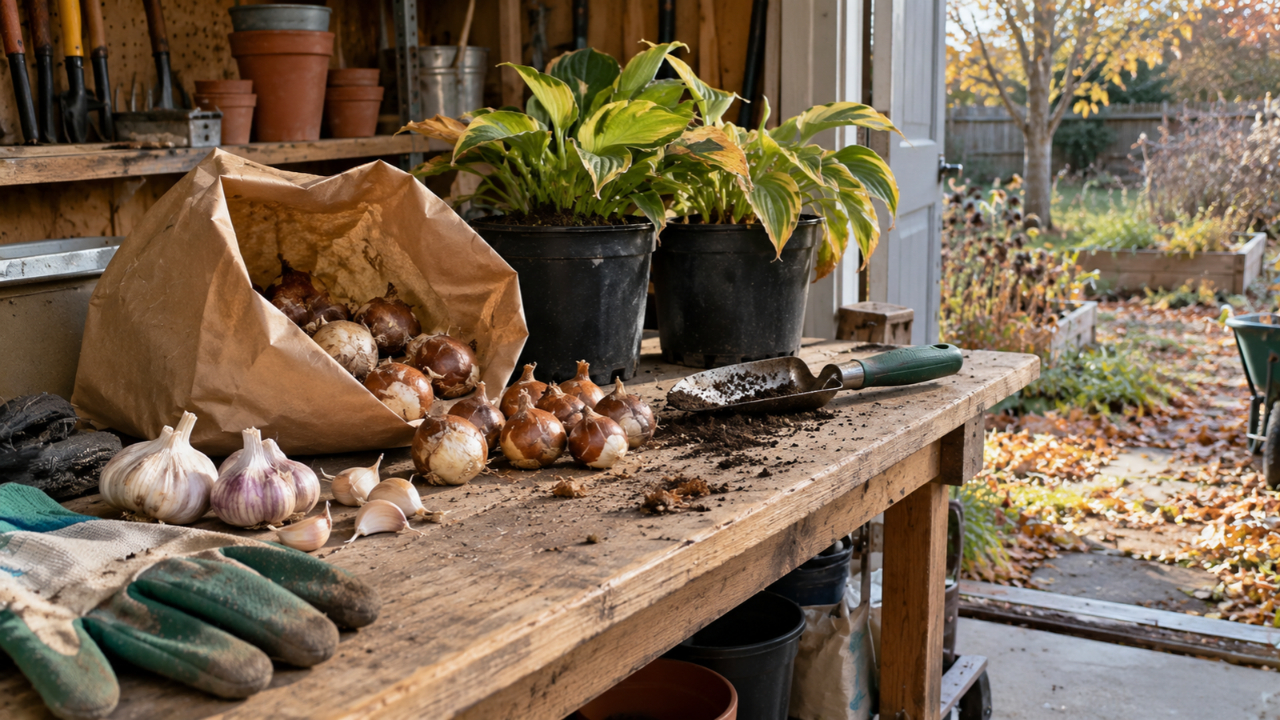
On the garage workbench this morning, I sorted what is left to plant. The garlic bed went in last weekend and is already under straw. Forty daffodil bulbs are still in a paper bag, and they go under the apple trees this weekend while the soil is soft.
Two clearance hostas will spend winter in buried pots until April. If you have plants waiting, sort them the same way. Garlic and bulbs go in now; shrubs and perennials only with six weeks before frozen ground; and everything else waits in a buried pot.