On a February morning in 2008, my first winter in this house, I found a terra cotta pot on the patio split cleanly in half, still full of frozen soil. I had left it exactly where the geraniums died in October. That same winter cost me a $640 plumbing bill, so the pot was not my biggest lesson, but it was the cheapest one.
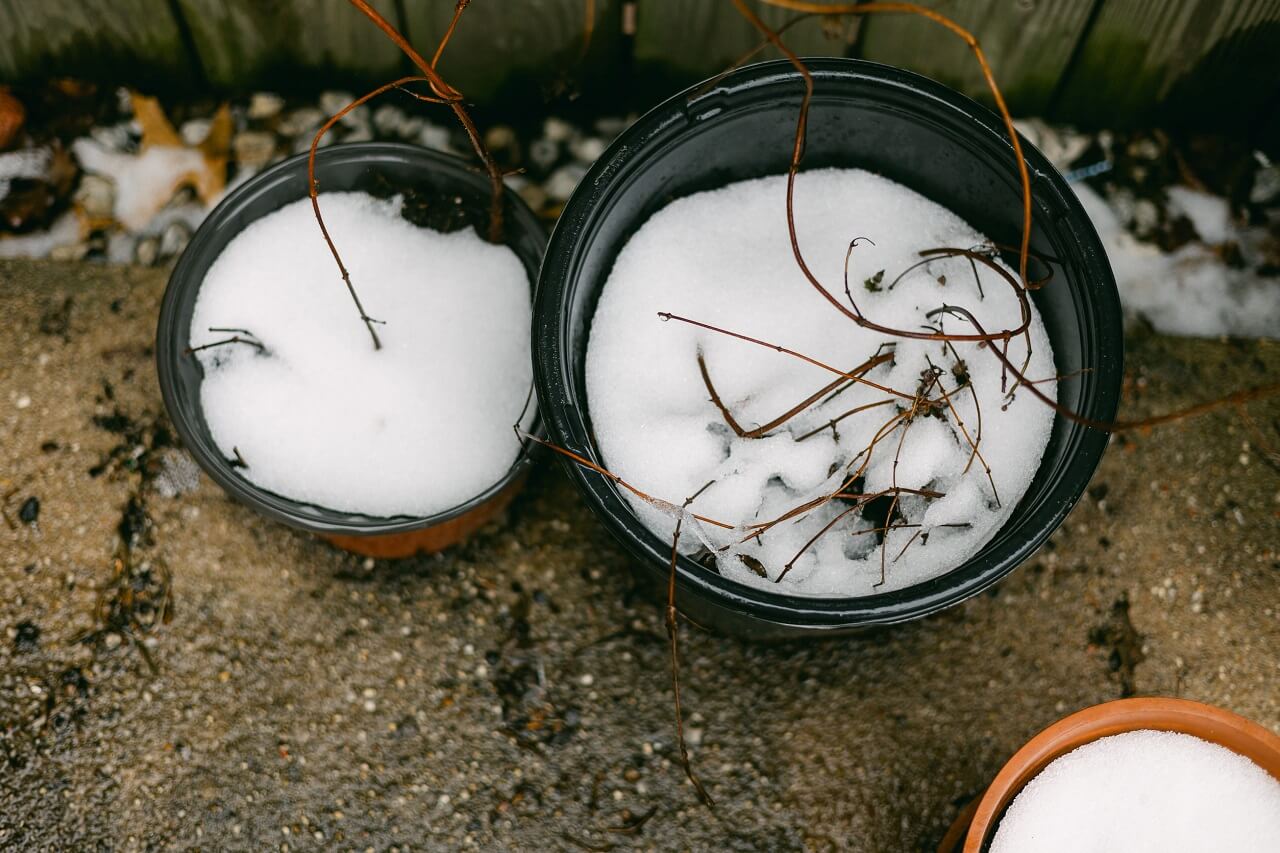
Whether your pots survive outside depends on what they are made of and how much water they hold when the cold arrives. Plastic, fiberglass, wood and large concrete planters usually come through fine. Terra cotta and most glazed ceramic need to be emptied and kept dry.
Why Pots Crack When It Freezes
Water is what breaks a pot, not cold. When water turns to ice it takes up more room, and the U.S. Geological Survey explains that ice is roughly 9 percent less dense than liquid water. That extra volume has to go somewhere.
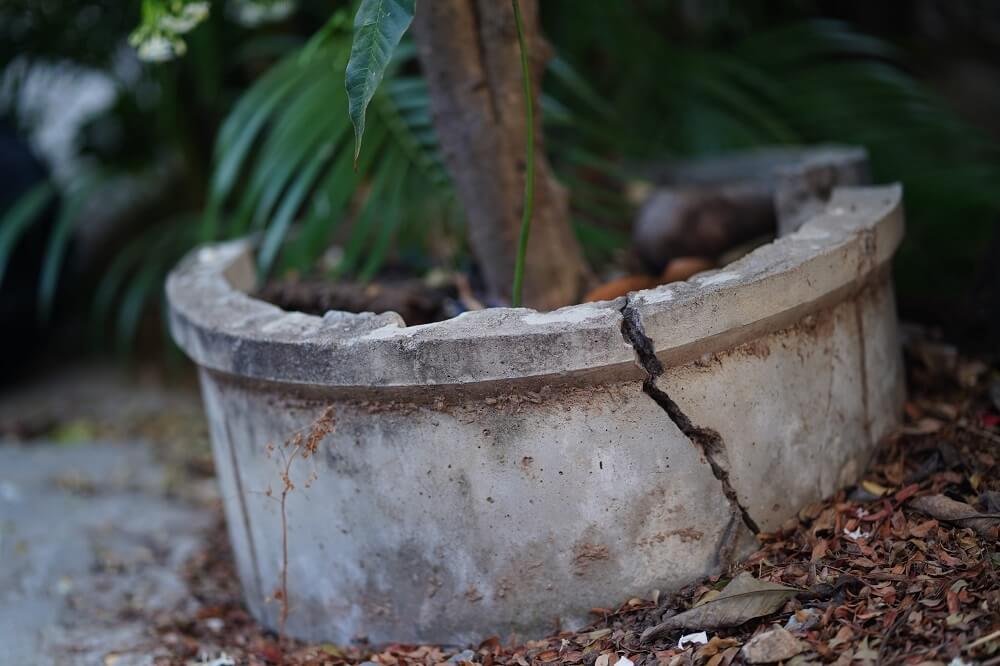
Pots fail in two ways. Porous clay soaks water into its walls, and University of Georgia Extension says that porous terra cotta is more likely to absorb water and crack in a hard freeze. The second failure starts inside, where wet potting mix freezes solid and pushes outward.
A frozen pot cracks from the inside out. Ice forms in the clay walls, the saucer and the wet soil, and all of it expands at once. A dry pot holding dry soil has almost nothing left to expand.
Repeated thaws make it worse. A pot that survives one hard freeze can still crack in March.
Which Pots Can Stay Out and Which Cannot
Penn State Extension advises against leaving clay, ceramic or glazed pottery exposed to winter weather and says large wooden or concrete planters can usually stay in place. Here is how I sort my own pots in zone 5, where the patio stays frozen from December into March.
| Pot material | Leave outside? | What I do |
|---|---|---|
| Unglazed terra cotta | No | Empty, dry and store upside down in the garage |
| Glazed ceramic | Risky | Empty and store, or dry and cover if too heavy to move |
| Concrete | Usually, if large | Keep it dry and covered so water cannot pool |
| Wood | Usually, if large | Leave in place and lift off wet ground |
| Plastic, fiberglass, resin | Usually | Leave out, but watch thin plastic |
The last row needs a caveat. Thin, cheap plastic can split when a full load of wet soil freezes, so I empty anything that flexes when I squeeze the rim.
The Soak Test I Use on Mystery Pots
Many pots come with no label, and “frost resistant” stickers rarely say what test the pot passed. I treat those claims like any unverified source, as I explain on my research and fact-checking page, and test the pot myself.
- Drip a spoonful of water onto the unglazed foot or bottom. If it darkens and disappears within a minute, the clay drinks water and should come inside.
- Look over the glaze in bright light. Fine spiderweb cracks in the glaze let water reach the clay underneath, so treat that pot like terra cotta.
- Tap the rim with a knuckle. A dull thud instead of a clear ring often means a hidden crack that a freeze will finish.
None of these checks is a lab test. They are my own rules of thumb, and they have sorted my pots well enough that I have not lost one to frost since.
How I Put Away Empty Clay Pots
After the 2008 pot, I started bringing every terra cotta pot into the garage before the soil in them could freeze solid. I moved them on October 12 this year and penciled the date on my garage doorframe, a few lines above earlier years.
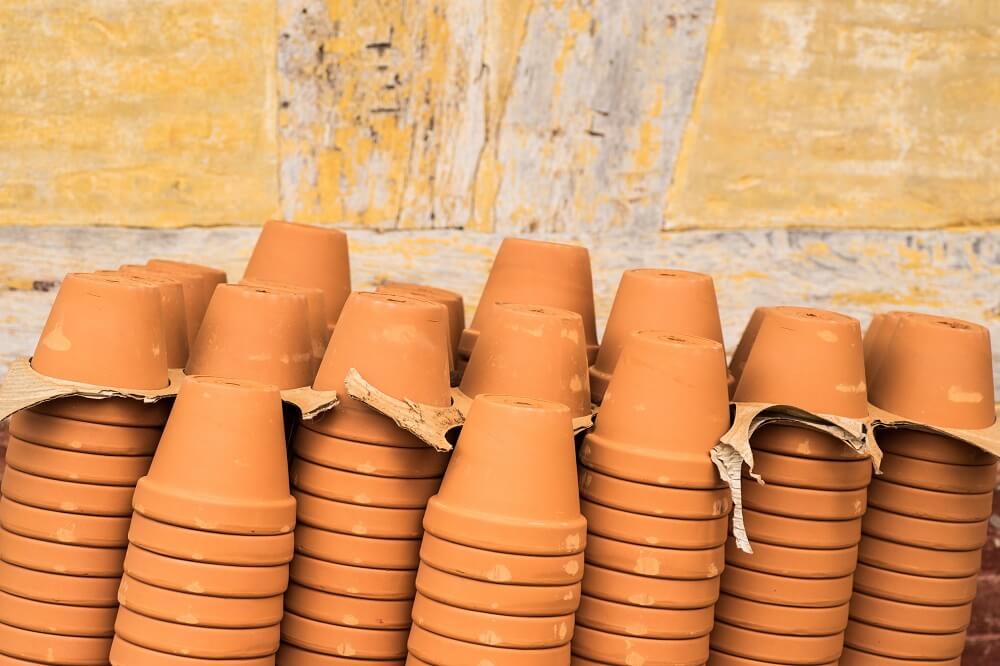
The routine takes about an hour. I knock out the old potting mix onto the vegetable beds, brush off the crust and let each pot dry for two or three days in the sun. Then I stack them upside down along the north wall of the garage, with a sheet of cardboard under the bottom pot so it never sits on a damp floor.
Old soil from annuals goes to the beds rather than back into pots. Soil from anything that looked sick goes in the trash. Clean, dry and stored upside down, a good clay pot can easily outlast the gardener who bought it.
Big Pots Too Heavy to Move
I have two glazed planters by the front steps that weigh more than I want to lift alone. University of Minnesota Extension covers exactly that problem in its November garden checklist, warning that water can freeze in the bottom or walls of ceramic containers and crack them.
Its advice matches what works on my steps.
- Let the soil dry down for a week or two before covering anything.
- Cover the pot with something waterproof, such as a heavy plastic bag, so rain and snowmelt cannot soak in.
- Take away the saucer, which turns into a ring of ice against the base.
- Set the pot on bricks or flat stones so it never sits in a puddle.
Timing matters more than materials here. Cover the pot after the soil dries and before the first long freeze, usually early November in my yard.
Plants That Stay in Their Pots Over Winter
A pot of living perennials is a different question, because the plant needs protection too. Illinois Extension educator Ken Johnson points out that most roots are far less cold-hardy than the stems and leaves above them, and roots in a pot cool faster than roots in the ground.
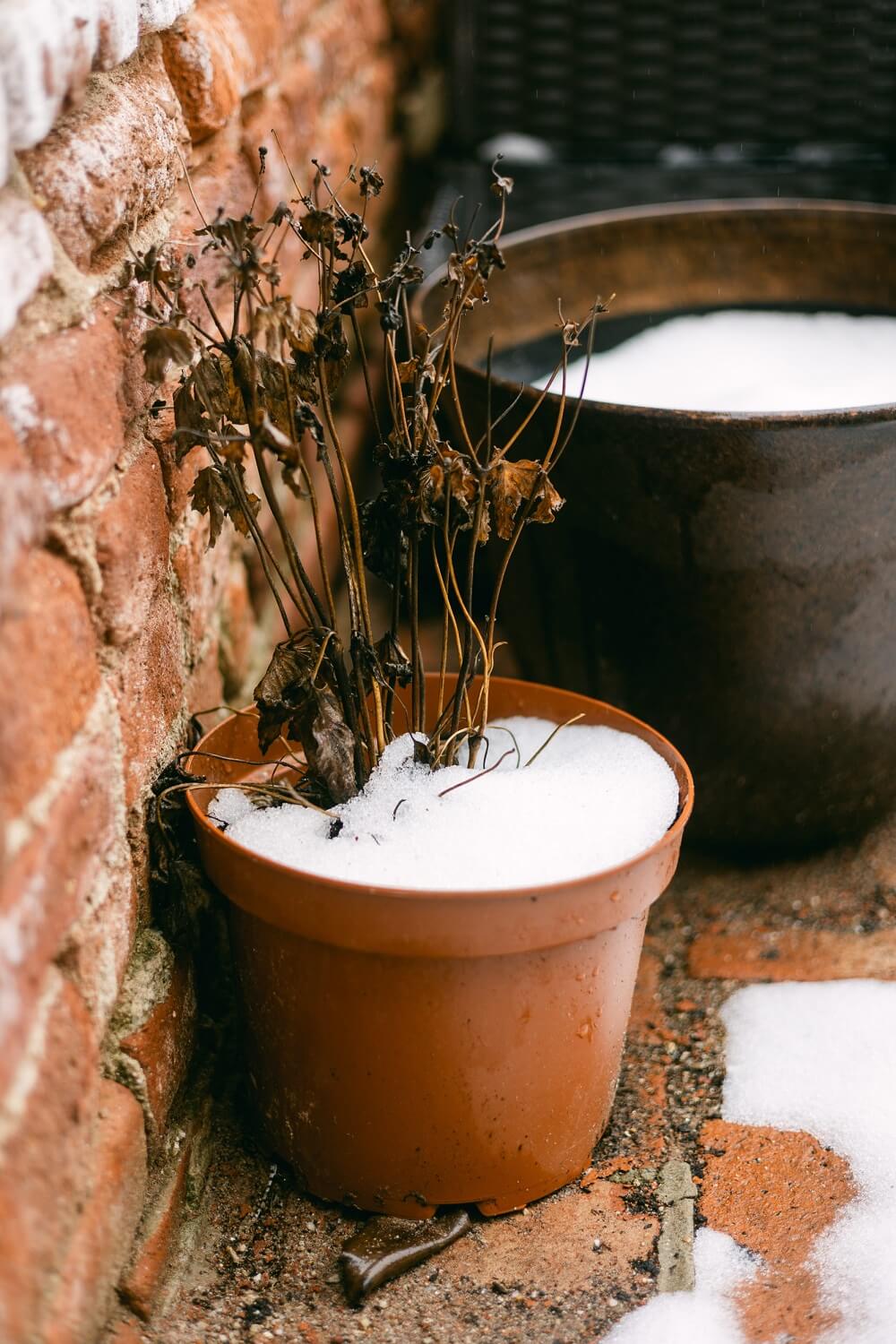
He recommends choosing plants hardy to two zones colder than where you live. In my zone 5 yard, that means a zone 3 plant for any pot left outdoors. He also suggests an unheated garage or shed that stays between 20°F and 45°F, so plants get the cold dormancy many need to bloom.
https://youtu.be/I9B_Q92k3Lo
Why the Two-Zone Rule Is Not the Whole Story
The two-zone rule is a fine starting point, but not every extension expert stops there. In an April 2026 answer to a Minnesota gardener, an Ask Extension expert argued that repeated freezing and thawing does more harm than the zone number, because it heaves roots up out of the soil.
The two views fit together better than they first appear. A hardy plant survives the cold, and a steady temperature keeps that cold from turning into constant heaving. Burying a pot up to its rim in the garden, which the same answer recommends, solves both problems at once.
Water helps too. Johnson notes that moist potting mix freezes more slowly than dry mix, so I water potted perennials well a few days before the ground freezes, then leave them alone.
What to Do Before the Soil Freezes
Walk the patio this weekend and sort every pot by material. Empty the terra cotta and any glazed pot that fails the soak test, dry them for a few days and stack them upside down indoors.
Leave plastic, fiberglass, wood and large concrete planters where they are, but pull their saucers and set them on bricks.
Let any big ceramic planter you cannot move dry for a week, then cover it with a heavy plastic bag. For potted perennials, check the tag.
Anything not rated at least two zones colder than your own goes into the ground up to its rim, or into the garage, before the ground turns hard.