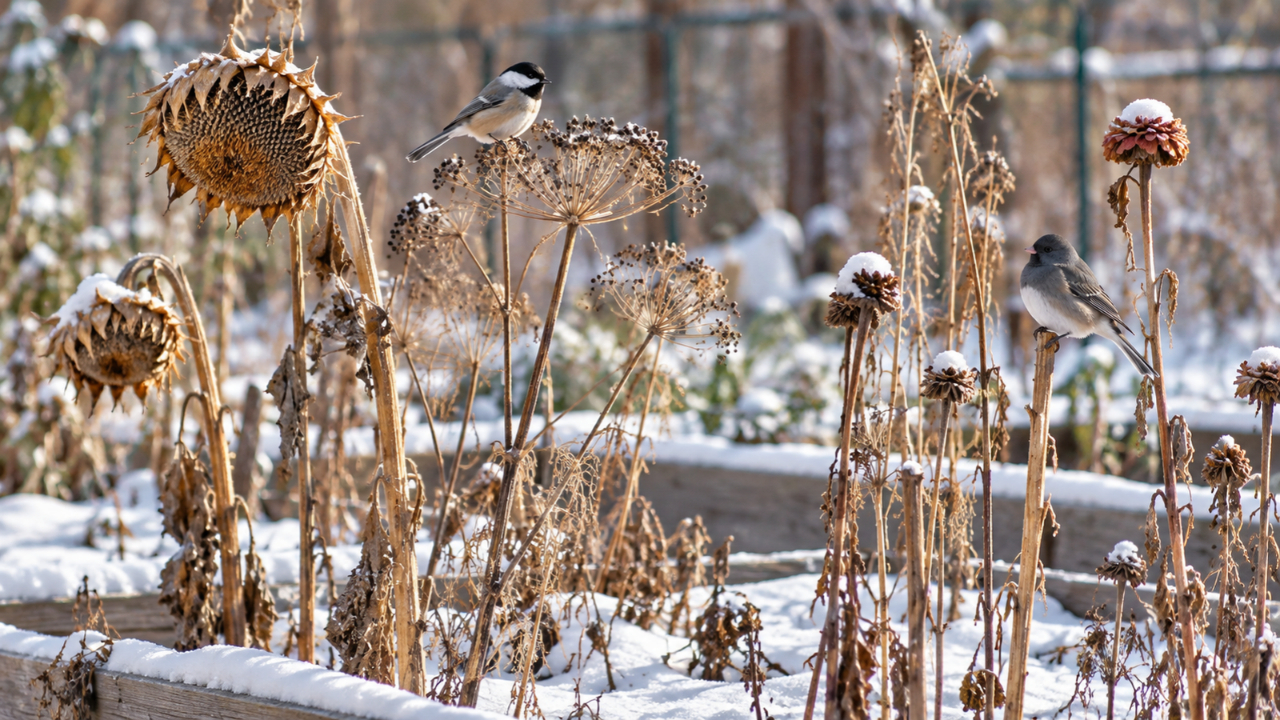
The first junco of the season showed up under my raised beds on October 11 this year, picking at seed dropped from a sunflower I never got around to cutting.
I logged it in my garden notebook, which I have kept every year since 2009, and explain more about it in the story behind this site.
For years I cleaned the vegetable beds down to bare soil every fall, and the birds went elsewhere. Now I leave six things behind on purpose. Each one holds seed, shelters insects or gives small birds cover from wind and hawks. A few things still get pulled, and I will say which.
1. Sunflower Heads Left on the Stalk
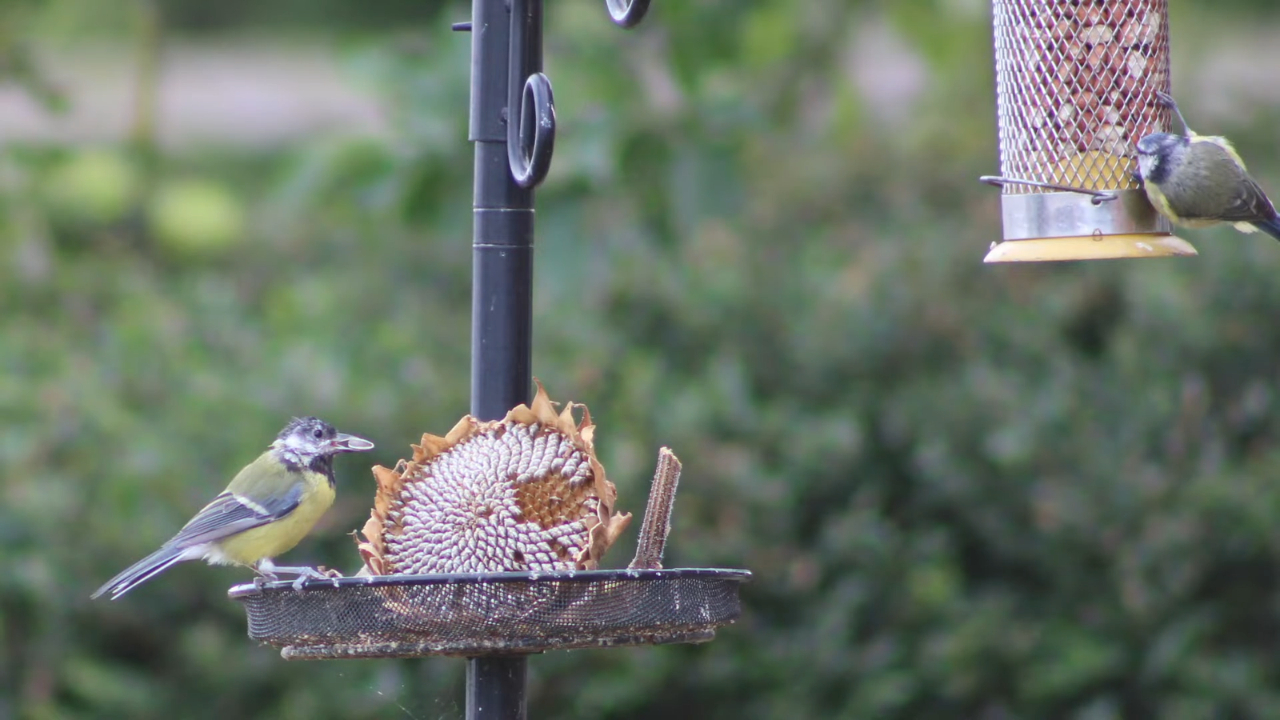
Sunflowers are the easiest bird food a vegetable gardener can grow. Kansas State Research and Extension tells gardeners who want the seed for themselves to cover ripening heads with a paper sack, because birds get there first. On most of mine, I skip the sack.
My sunflowers grow along the north edge of the raised beds, where their shade falls on the path instead of the tomatoes. I cut two heads in September for roasting and leave the rest standing.
Chickadees and goldfinches work them from the stalk well into winter, and every seed they drop feeds the ground birds below.
Did You Know
A sunflower head is ripe when its back turns lemon yellow, and the florets in the center shrivel. Heads left 5 or 6 feet up stay above most snow, so leave the stalk at full height rather than cutting it down to save the seed.
2. Zinnias and Marigolds Between the Vegetables
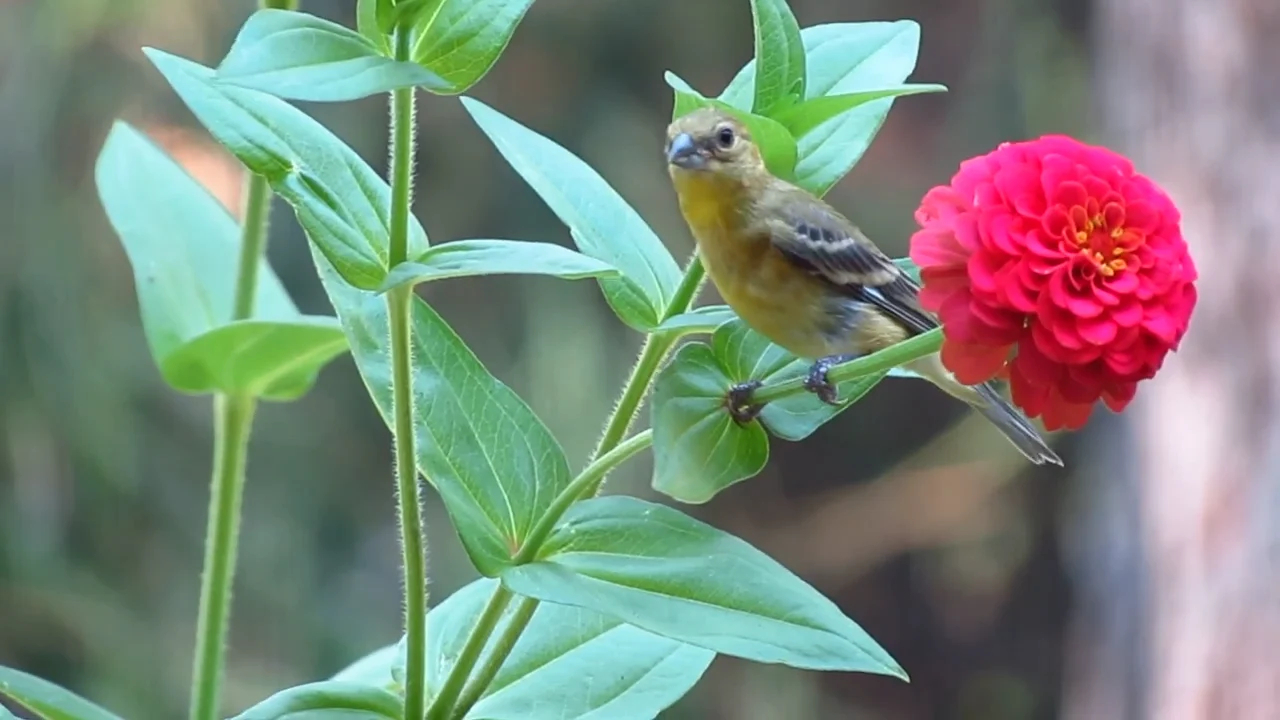
I tuck zinnias and marigolds into the ends of each raised bed every spring to pull in pollinators. In fall they earn their space a second time.
Illinois Extension lists both among the garden flowers whose seed heads feed birds in winter, and in my yard the goldfinches find the zinnias before anything else.
Getting real seed out of them takes a little planning.
- Stop deadheading by early September, so the last flowers have time to ripen seed before the first hard frost.
- Leave the plants standing, roots and all, until spring.
- Pull any plant coated in powdery mildew, because the spores can overwinter in garden debris.
Some seed always falls to the soil and sprouts the next June. I pot up those volunteers and hand them to the neighbors, who have stopped asking where they came from.
3. Tall, Hollow Stalks Standing Through the Snow
When I clean the beds, the tallest stalks stay put. Spent sunflowers, dill that went to seed, and the stiff stems of the zinnias all ride out the winter where they grew.
Those stalks do two jobs. They give small birds a perch out of the wind, and the hollow ones shelter insects that will help pollinate and patrol the garden next summer.
View this post on Instagram
Illinois Extension notes that tall dead plants give birds useful habitat only when they stand up through the snow, and that native pollinating bees spend the winter inside hollow stems. Short, floppy stems do neither job.
My rule is simple. Anything 2 feet or taller stays standing. Anything that has already flopped onto the soil gets pulled in October, because it does nothing for the birds once snow covers it.
4. Shredded Leaves Over the Empty Beds
I raked and bagged every leaf for years, and I was wrong. Now I run them over with the mower and spread them across the empty beds, where they protect the soil and give ground birds something to scratch through.
University of Maryland Extension points out that only about 2 percent of described insect species ever earn the label of pest, and many helpful ones winter in leaf litter.
A few limits from Illinois Extension guidance on winter hospitality for wildlife keep the leaves useful.
- Shred first. Mulching cuts leaf volume by at least half.
- Keep the layer in beds no deeper than 6 inches.
- Rake leaves off the lawn, where they invite disease and shelter mice and voles.
- Mulch the garlic bed last, after the ground freezes, so voles do not move in early.
Shredded leaves can also protect shallow-rooted perennials near the vegetable beds. For coral bells, keep mulch loose and clear of the crown. My coral bells winter care guide explains how to reduce frost damage.
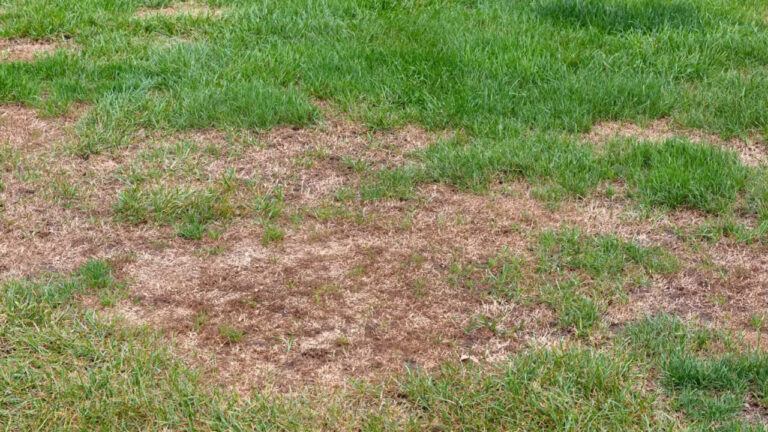
Thick leaf mats can leave brown patches on the lawn after winter. Some recover on their own, but dead areas may need new grass seed. My guide to lawn reseed for brown patches explains how to repair bare spots.
5. Coneflowers and Black-Eyed Susans on the Prairie Edge
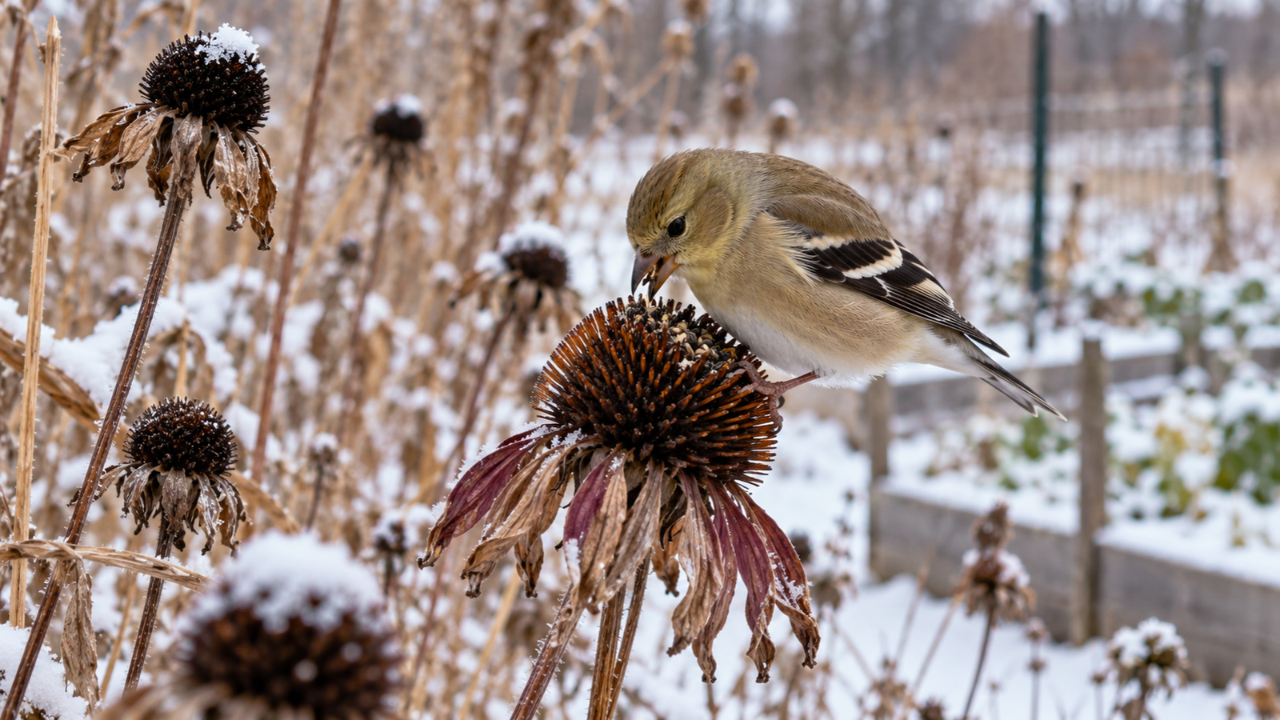
Several years ago I turned 1,200 square feet of lawn beside the vegetable beds into native prairie. It is now the best bird feeder I own, and I never fill it. Purple coneflowers and black-eyed Susans hold their seed heads upright through the worst of January.
University of New Hampshire Extension names finches, chickadees, juncos and sparrows among the birds that feed on perennial seed heads. The same page notes that North America has lost nearly 3 billion birds since 1970, which is reason enough to leave a few dead flowers standing.
I do not cut anything on the prairie strip until spring. On snowy mornings the juncos work the ground under the coneflowers while goldfinches hang upside down on the heads above them.
No room for a prairie? Plant three or four coneflowers at the end of a vegetable bed, and they will come back every year.
6. A Small Brush Pile in the Back Corner
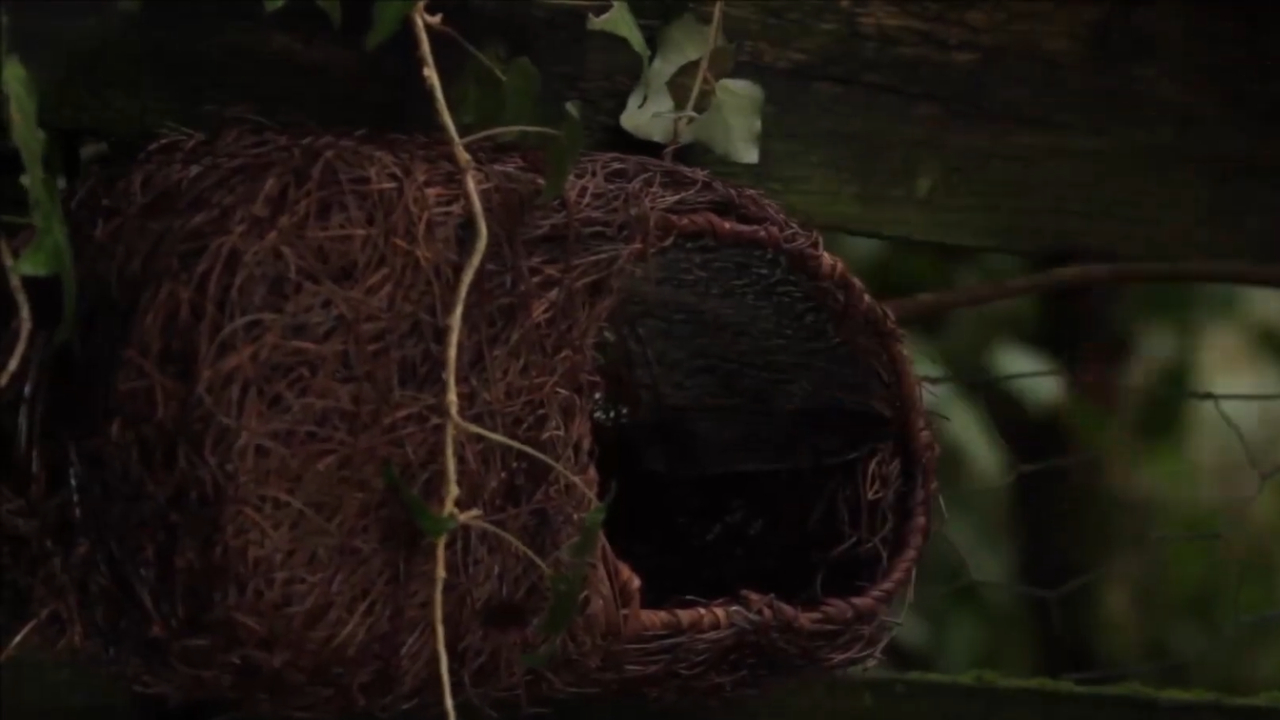
Food helps only if birds feel safe enough to eat it. Every fall I stack the pea brush, the bean poles that cracked over the summer and whatever branches the apple trees dropped into one loose pile.
The Connecticut Department of Energy and Environmental Protection describes full-size wildlife brush piles 10 to 20 feet across and 4 to 8 feet high, and it advises keeping them away from homes and gardens because of fire risk and nuisance wildlife.
Mine is far smaller, about 4 feet across, and sits in the corner farthest from the beds. The rabbits that shelter there would gladly eat my spring lettuce.
- Lay the thickest pieces down first in a crisscross, leaving gaps of 6 to 8 inches.
- Pile finer brush on top until the inside is shaded but not packed tight.
What I Clear Out Before Winter
Leaving things for birds does not mean leaving everything. Some debris carries disease and pests straight into next season, and no bird is worth a summer of sick tomatoes.
South Dakota State University Extension advises gardeners to bag and trash diseased plants instead of composting them.
| What goes | Why it goes |
| Tomatoes, peppers or eggplant with disease or virus symptoms | Fungal and bacterial spores overwinter in plant debris |
| Squash and pumpkin vines | Adult squash bugs spend the winter under debris near old plantings |
| Asparagus ferns | Adult asparagus beetles overwinter in old ferns |
I pull those plants in early October, the same week I drain the hoses. Healthy vines and leaves can go to the compost pile or stay as mulch, and nothing on that list feeds a bird anyway.
What to Do Before the First Snow
Walk your beds this weekend with a trash bag in one hand and pruners in the other. Bag the diseased tomatoes, squash vines and asparagus ferns first, because those carry trouble into spring.
Then stop. Leave the sunflower heads, the zinnias and every stalk taller than 2 feet exactly where they stand.
Shred whatever leaves land on the lawn and spread them over the empty beds, no deeper than 6 inches. Stack the pea brush and cracked poles in the corner farthest from your lettuce.
Before you cover every empty bed, check what to plant in October. Garlic and a few other crops can still go into the soil after the first frost.
By the time the first real snow falls, the birds will already know where to find breakfast.
Some people asked me this, so it might be useful to you too
@inthecottagegarden Should you feed the birds in winter? Here’s why I put food out for the birds in my garden, and the best things to feed them 💚 #gardening #feedthebirds #wildlifegardening ♬ How`s Your Day – aAp Vision
1. When can I cut the old stalks down in spring?
Illinois Extension recommends waiting until nighttime temperatures stay above 50°F, so insects inside the stems have emerged. If you must tidy up sooner, cut stems no shorter than 15 inches. In my zone 5 yard, that usually means late May or early June.
2. What should I do with the stems once I cut them?
Stack them loosely at the garden edge instead of bagging them. The same Illinois guidance explains that a loose pile still lets late insects climb out.
3. Is it safe to keep a bird feeder up while avian flu is around?
The Wisconsin Department of Natural Resources says the virus behind highly pathogenic avian influenza still exists in the state. If sick or dead songbirds turn up near a feeder, take it down for 2 weeks.
Wash feeders with soap and water, then disinfect with a 10 percent bleach solution, or 1 part household bleach to 9 parts water.
4. Will leaving plants up bring mice into the garden?
In my yard, matted leaves and brush near buildings draw mice far more than standing stalks do. Keep leaves off the lawn, keep mulch under 6 inches, and put any brush pile well away from the house.