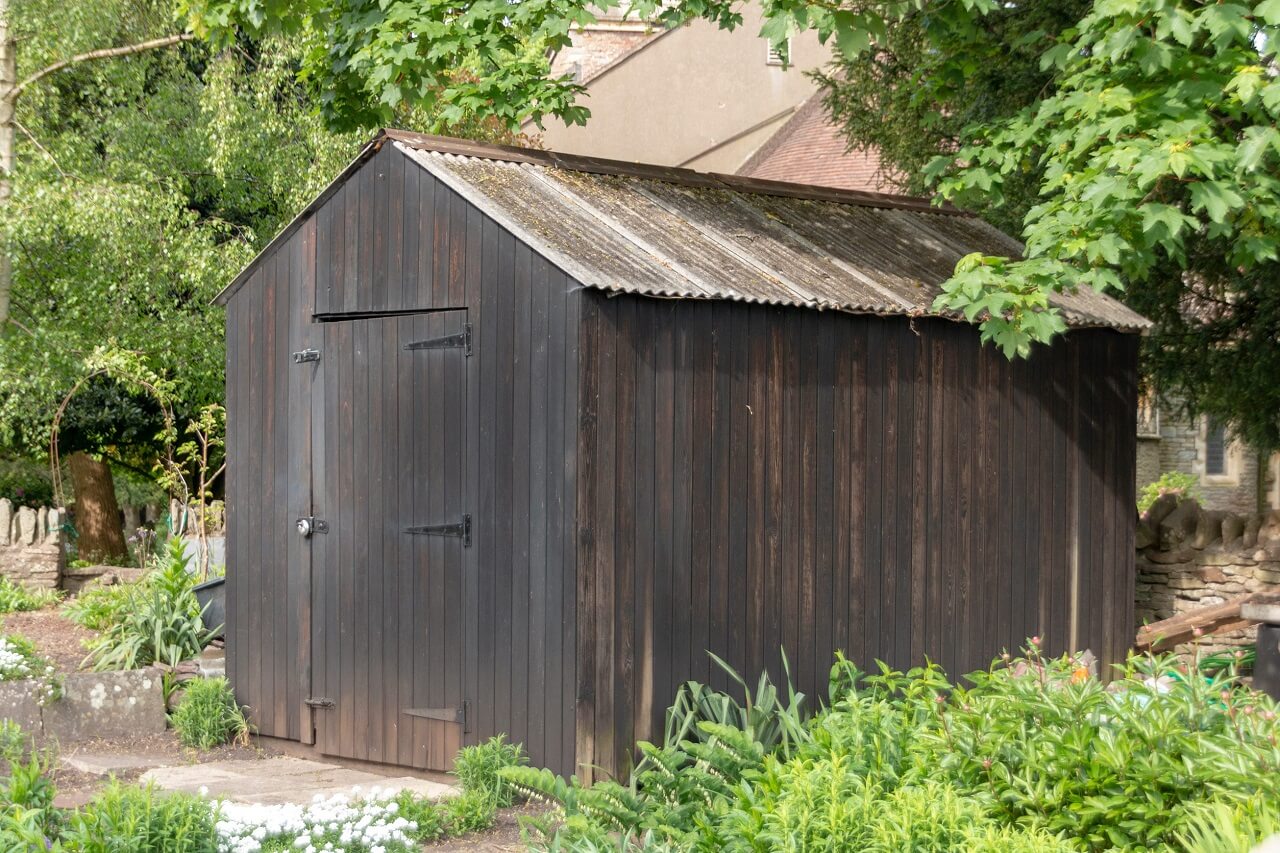
Last April I opened my garden shed to find a 7 pound bag of grass seed chewed open at one corner. Behind it sat a softball-size nest of shredded row cover and stuffing from an old kneeling pad. On the shelf above, the tin box that once held my grandmother’s canning recipes and now holds my seed packets was untouched.
Mice cannot chew through metal, and that tin box is the whole lesson. They nest in a shed when it offers food, soft bedding and a way in. Remove the first two, close the third with metal, and the shed is no longer worth the trip.
Why a Garden Shed Looks Like Home to a Mouse
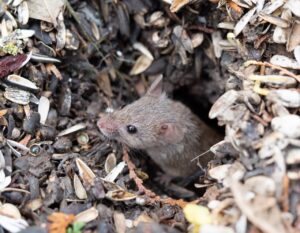
A shed gives a mouse everything it needs within a few steps. University of California IPM notes in its pest note on house mice that they seldom travel more than 30 feet from their nest and food. Seed, burlap and a dry corner all fit inside that range in an 8 by 10 foot shed.
Getting in is easy. The Centers for Disease Control and Prevention says mice can squeeze through a hole the width of a pencil, and the agency tells homeowners to seal outbuildings and garages along with the house.
A pencil is about 1/4 inch across. If you can slide one into a gap under the door or along the foundation, a mouse can follow it. Cracks you never notice standing up are open doors at mouse height.
Every shed I have checked had at least one such gap, usually under the door.
How One Mouse Turns Into a Shed Full
Waiting until spring to deal with one mouse is how a shed ends up with twenty. The same UC IPM note says a female house mouse has 5 to 10 litters a year, with about 5 or 6 young per litter, and the young can breed at 5 to 6 weeks old.
Here is my own arithmetic, not a published figure. A five month winter is roughly 40 percent of a year, so one well-fed female in a sheltered shed could have 2 to 4 litters between November and April. At 5 or 6 pups each, that works out to 10 to 24 young before any of her daughters start breeding.
I would expect real numbers in an unheated shed to run lower, and the UC note does not give winter figures. Even the low end explains why I treat one dropping in October as an urgent message.
Step One Is Taking Away Food and Bedding
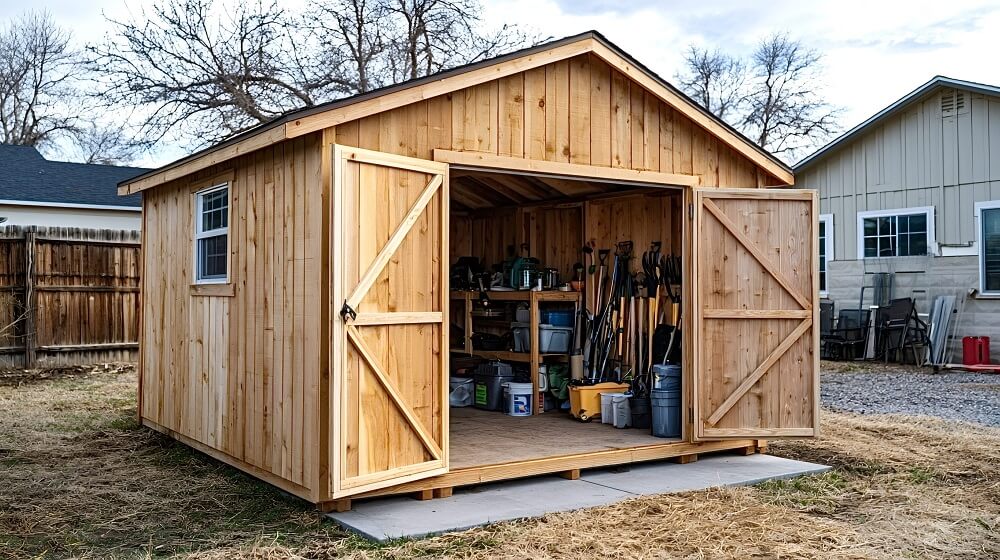
The same CDC page advises keeping grain and animal feed in thick plastic or metal containers with tight lids. In a garden shed, that rule covers more than birdseed. Every October I sort my shelves by what a mouse would do with each item.
| Shed item | Why mice want it | Where mine goes |
|---|---|---|
| Birdseed, grass seed, saved squash and bean seed | Food | Galvanized trash can with a tight lid |
| Seed packets | Food | Metal tin on the shelf |
| Burlap, row cover, old cushions, rags | Nest material | Lidded plastic tote, or the house |
| Cardboard boxes and newspaper | Nest material | Recycling bin before winter |
| Hand tools, pots, hoses | Cover only | Stay, hung on walls off the floor |
Hanging tools and stacking pots off the floor matters more than it looks. Clear floor along the walls leaves mice nowhere to hide and lets you spot droppings in seconds.
Step Two Is Closing Every Gap Wider Than a Pencil
Material matters as much as effort. UC IPM lists wire screen, coarse steel wool, metal and concrete as effective, and warns that plastic screening, rubber, vinyl, foam and wood get chewed through.
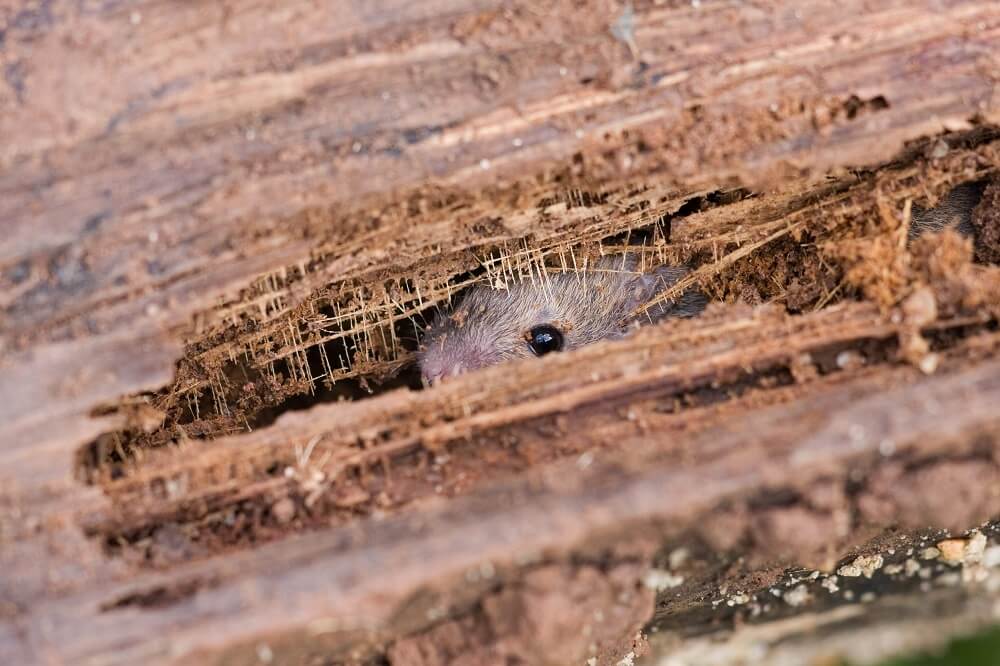
Walk around the shed with a pencil in your pocket and check these spots first.
- The gap under the door. Screw a metal sweep or aluminum flashing across the bottom.
- Corners where siding meets the foundation or skids. Screw 1/4 inch hardware cloth over them.
- Vents and gable openings. Back them with the same hardware cloth.
- Small holes and cracks. Pack them with steel wool, then hold it in place with caulk.
Outside, pull weeds and rake leaf drifts away from the walls. I rake deep drifts off my lawn every fall for snow mold reasons, as I explain in why I rake leaves before the snow, and none of them get piled against the shed.
What I Changed After the Grass Seed Nest
That April nest sent me back out with a flashlight and a pencil. I found two gaps I had never noticed. One was a 1/2 inch slot where the door had warped away from the frame, and the other was a corner where the bottom trim had rotted.
I screwed a strip of aluminum flashing across the door bottom and cut a square of hardware cloth to cover the rotted corner. The grass seed went into a 20 gallon galvanized can, and every scrap of burlap and row cover moved into a lidded tote in the basement.
The total cost was under $40, most of it for the can. I set four snap traps along the walls that fall and checked them weekly. Two traps caught mice in early November, and nothing after that through March.
Peppermint Oil and Ultrasonic Plug-Ins
Every fall someone tells me to soak cotton balls in peppermint oil. In a 2023 reply on Ask Extension, Dr. Dana Sanchez wrote plainly that peppermint will not keep mice out and pointed to traps, food removal and sealing instead.
Peppermint has a strong smell, and that is about all it has. Electronic devices fare no better. UC IPM says high-frequency sound devices are not effective, because the sound does not travel behind objects, fades quickly with distance, and mice soon get used to repeated sounds.
Setting Snap Traps the Right Way
Exclusion keeps new mice out, but traps catch the ones already inside. I use plain wooden snap traps because they work fast, cost little and do not put poison into the food chain.
- Set traps along walls and behind objects, where mice travel, with the trigger end touching the wall.
- Space them no more than about 10 feet apart, following the UC IPM guidance.
- Use a pea-size dab of peanut butter or a few seeds, since too much bait lets a mouse lick it clean without springing the trap.
I skip poison baits in the shed. UC IPM warns that bromethalin can pass up the food chain to predators that eat poisoned mice, and the hawks and owls around my yard are doing the same job for free.
Cleaning Up a Nest Safely
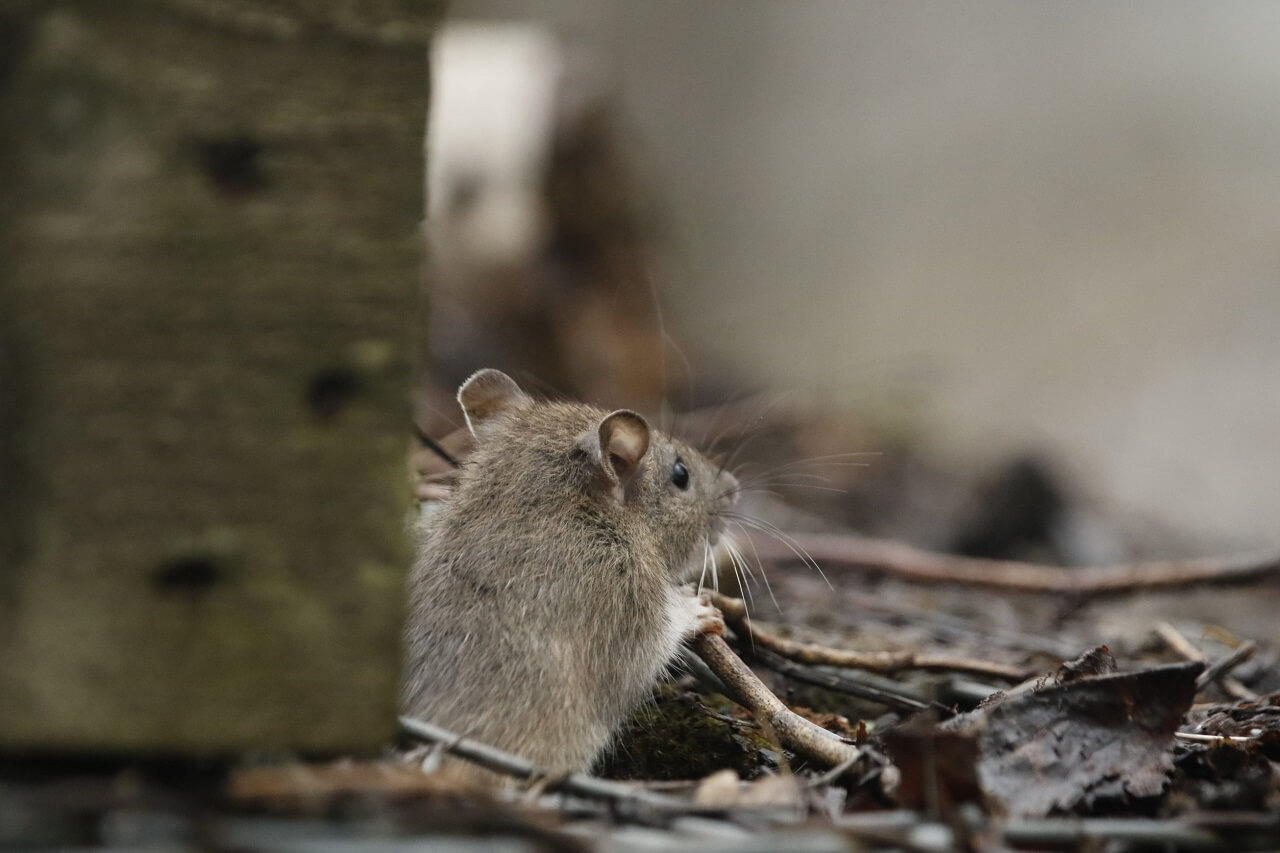
Mouse droppings in a closed shed deserve real caution. Wisconsin health officials told reporters in May 2026 that the public risk from hantavirus remains low, but the Sin Nombre strain found here spreads through deer mouse droppings, most often during cleanup of closed, poorly ventilated spaces.
The CDC rodent cleanup instructions are simple to follow.
- Open the door and windows and leave the shed for 30 minutes.
- Put on rubber or plastic gloves.
- Spray droppings and nests until very wet with a fresh mix of 1 1/2 cups of bleach per gallon of water, and let it soak 5 minutes.
- Wipe up with paper towels and double-bag the nest and waste.
Never sweep or vacuum droppings first, because that lifts particles into the air you breathe.
What to Do Before the Ground Freezes
Pick a dry afternoon this week and empty the shed onto the lawn. Put every seed, grain and bag of birdseed into a metal can or thick plastic tote with a tight lid.
Move burlap, cushions, rags and cardboard out for the winter. Then walk the outside with a pencil, and close every gap it slides into with hardware cloth, flashing or steel wool and caulk.
Set four snap traps along the inside walls, check them once a week, and keep a box of disposable gloves on the shelf for the day one of them is full.