My neighbor’s silver maple drops most of its leaves over our shared fence in the last week of October, often while my lawn is still green. For years I raked every one of them into paper bags.
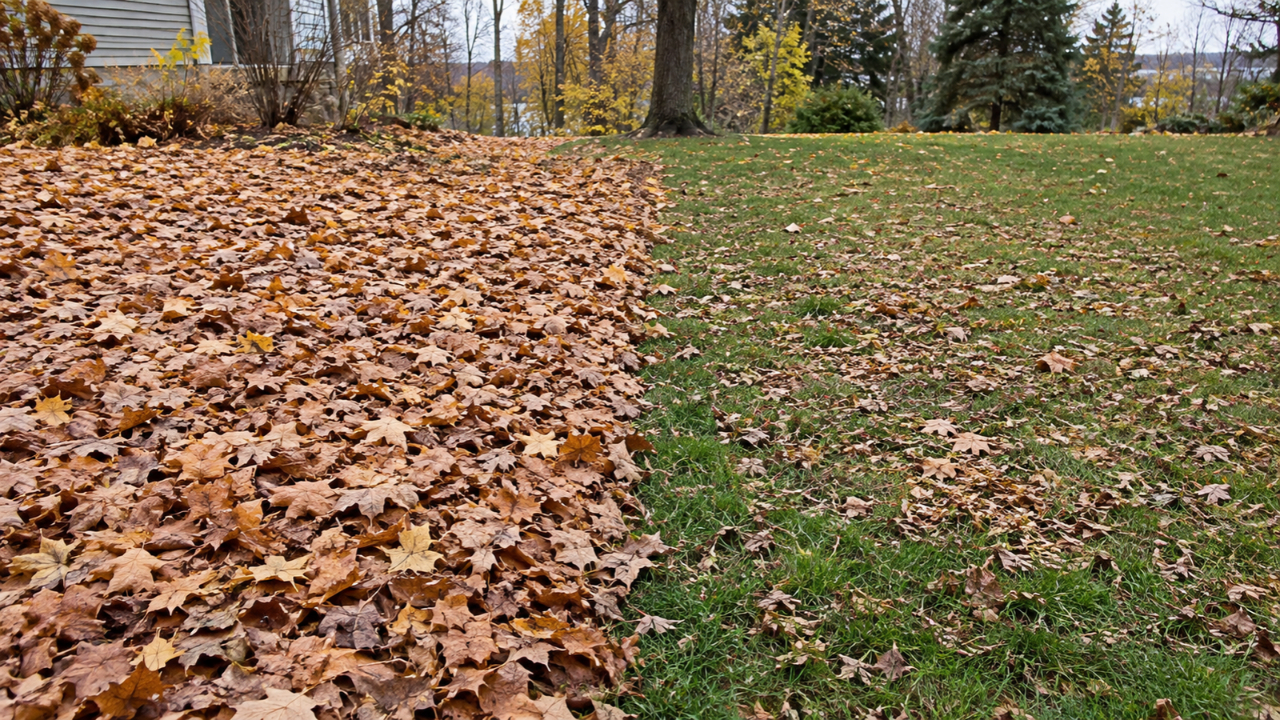
Now my answer is more specific. A thin layer of shredded leaves can stay on the lawn all winter, but a mat of whole leaves should come off before snow buries it, because that mat is where snow mold gets its start.
Below is how much cover grass can handle and the routine I follow in my zone 5 yard.
Why a Leaf Mat Invites Snow Mold
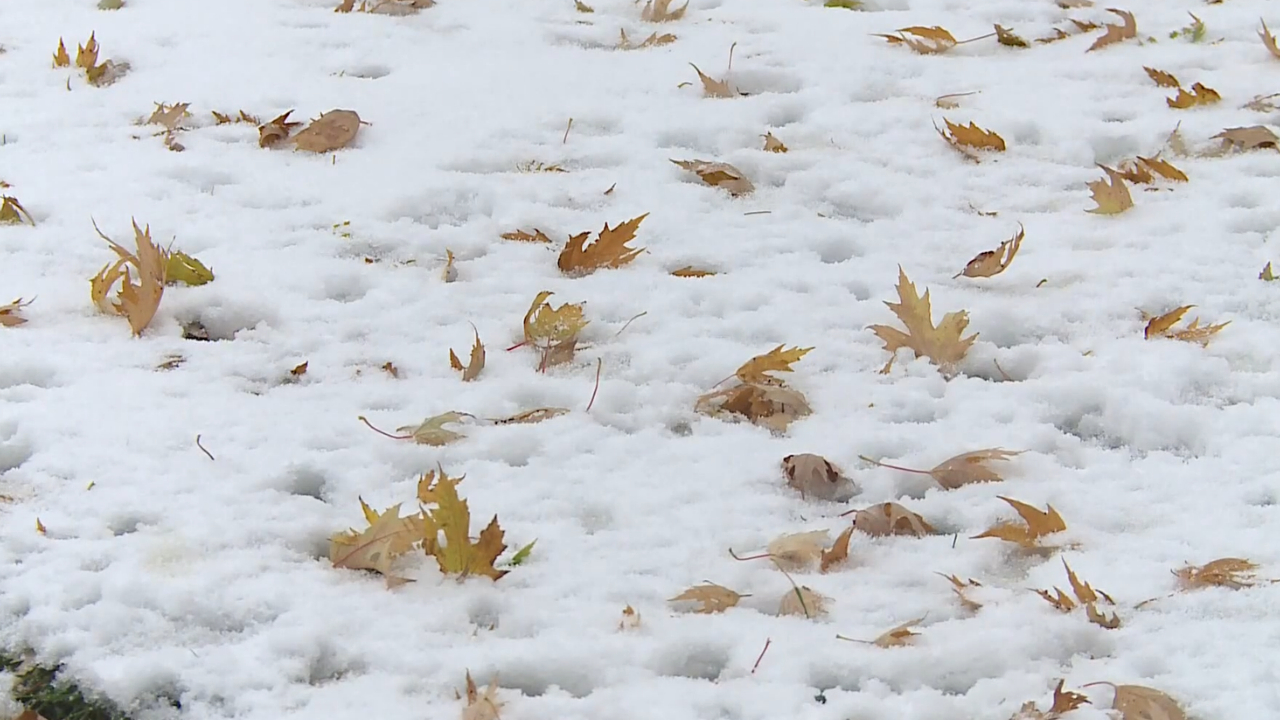
Snow mold is a group of fungal lawn diseases that stay active in cold, wet weather, when grass itself is barely growing. The fungi survive in thatch and plant debris all year.
They become active when snow falls on ground that has not frozen solid, keeping grass blades damp and near freezing for weeks.
A layer of whole leaves makes those conditions worse. It flattens the grass, holds moisture against the blades, and adds insulation between the snow and the soil.
Iowa State University’s guide to snow mold lists raking up fallen leaves in fall among its prevention steps, along with mowing at the recommended height and avoiding excess nitrogen.
Snow mold is not one disease. The name covers gray snow mold, caused by Typhula fungi, and pink snow mold, caused by Microdochium nivale. Both leave circular, straw-colored patches in the lawn as the snow melts.
What the New Wisconsin Leaf Study Found
Researchers at the UW-Madison OJ Noer Turfgrass Research and Education Facility spent three winters testing the question I hear every October.
Horticulture outreach specialist Bruce Spangenberg summarized the work this month in a UW-Madison Extension article on winter leaf coverage, which compares four leaf treatments with plots kept clear all winter.
- 2 inches of shredded leaves
- 2 inches of whole leaves
- 4 inches of shredded leaves
- 4 inches of whole leaves
Each spring, the team removed the leaves and rated winter damage, turf quality, and color. Preliminary data suggests 2 inches of mulched leaves is a reasonable limit, while 4 inches is highly likely to cause winter damage.
Final analysis is still pending, so treat the numbers as strong guidance rather than settled science.
Gray and Pink Snow Mold Behave Differently
Knowing which fungus you face changes how much the leaves matter. Gray snow mold needs a long stretch of snow, while pink snow mold can spread on cold, soggy grass with no snow at all.
The comparison below draws on the UMass Extension fact sheet on turf snow molds and a 2020 extension fact sheet on snow molds.
| Feature | Gray snow mold | Pink snow mold |
| Cause | Typhula fungi | Microdochium nivale |
| Active temperatures | Slightly below 32°F to about 45°F | About 32°F to 60°F |
| Snow cover needed | Yes, usually 45 to 60 days | No |
| Typical patch size | About 1 to 3 feet across | Usually under 8 inches |
| What you see | Matted grayish-white blades, tiny brown fungal bodies | Bleached spots, sometimes with a pink edge |
The pink snow mold detail is easy to miss. Plant pathologist Richard Latin notes in a 2006 Purdue Extension bulletin on pink snow mold that snow cover is not necessary for extensive infection.
Long, matted grass extends the conditions the fungus likes, so a soggy leaf mat can cause trouble even in a rainy, snowless winter.
How Much Leaf Cover Your Grass Can Handle
View this post on Instagram
Two research groups offer two useful yardsticks. University of Minnesota guidance on raking leaves by turfgrass specialist Sam Bauer says leaves covering about 10 to 20 percent of the lawn may be acceptable, but no more.
The Wisconsin study adds a depth limit of 2 inches, and only for shredded leaves.
I check both with a simple test. Standing over the lawn, I look straight down. If grass blades show through everywhere, coverage is light enough to mow and leave. When I see solid brown, I push a ruler into the pile, and anything deeper than 2 inches, or any mat of whole leaves, gets raked.
Did You Know?
Mulched maple leaves have been shown to reduce weed seed germination in turf, according to research the Minnesota team cites. Honey locust leaves may add extra nitrogen, since the tree is a legume.
The Spring My Back Fence Turned Straw-Colored
My notebook entry from April 2014 reads “fence line, bad.” A windy week in early November had piled the maple leaves 6 inches deep against the back fence, and snow arrived before I got to them.
After the melt, a strip about 3 feet wide and 20 feet long was matted, tan, and crusted with grayish fungal threads.
I did what I used to tell customers at the garden center. Once the surface dried, I raked the patches gently with a leaf rake to lift the matted blades and let air in, then left them alone.
Most of the strip greened up by mid-May, a few weeks behind the rest of the lawn. Two spots near a fence post never recovered, and I overseeded them with Kentucky bluegrass.
Since that spring, the fence line is the first place I clear every fall.
My Fall Leaf Routine, Step by Step
Here is the order I follow, timed to my zone 5 calendar. Gardeners in other zones can shift each step to match when their leaves fall and their grass stops growing.
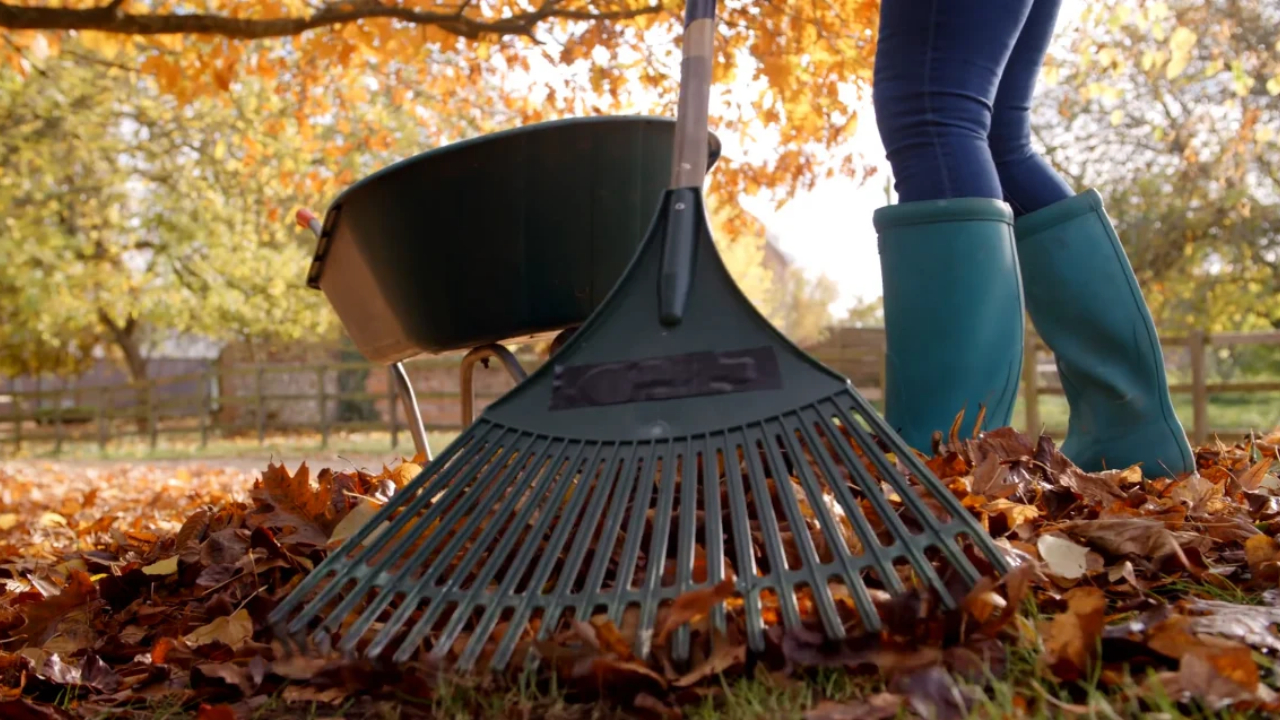
- Mow over scattered leaves once a week as they fall, with the mower set to mulch. Small pieces settle into the turf and break down over winter.
- Rake drifts and any layer deeper than 2 inches, starting with fence lines, corners, and low spots where leaves collect.
- Keep mowing until the grass stops growing. My final cut usually lands in early November at about 3 inches, within the 2.5 to 3 inch range Purdue suggests to limit matting.
- Skip nitrogen after the first frost. UMass recommends finishing fall fertilizing a few weeks before dormancy, using slow-release forms.
- Spread shoveled snow around instead of piling it in one spot on the lawn.
Where the Raked Leaves Should Go
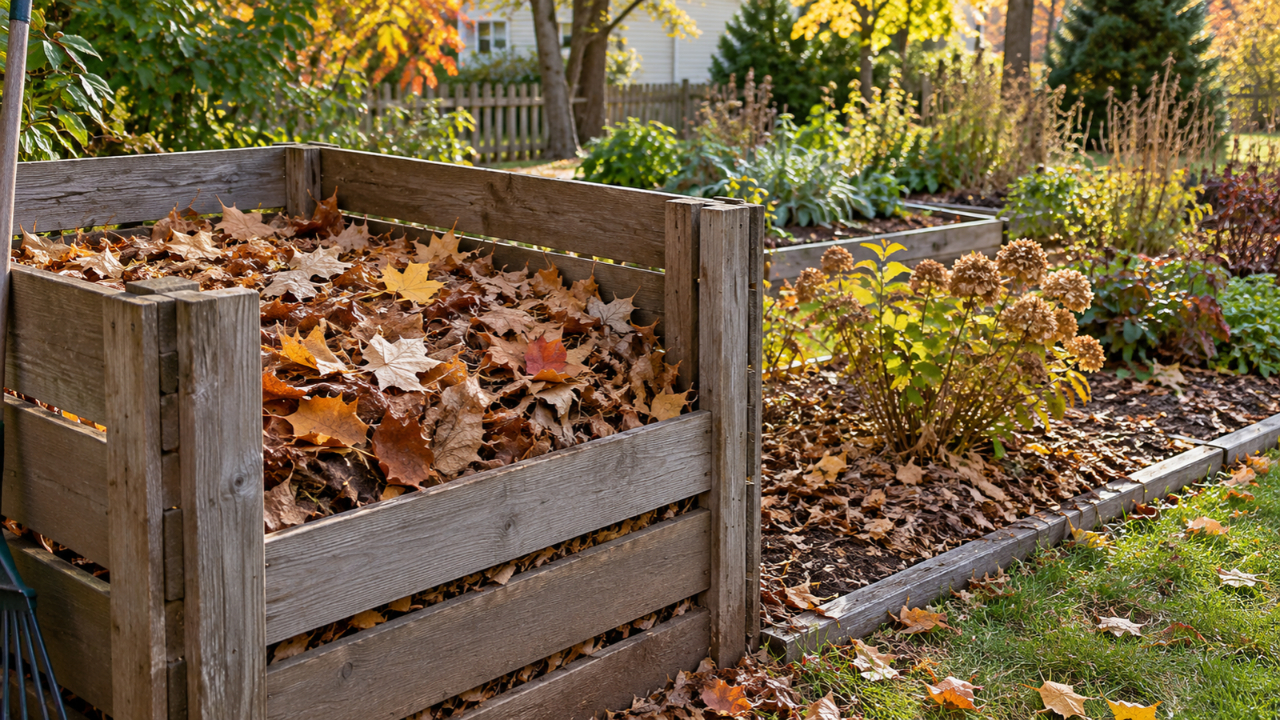
Raking leaves off the lawn does not mean sending them to the curb. I used to fill 30 paper bags every fall, and I now think that was a waste of good material.
University of New Hampshire Extension advice on fall leaf raking makes the same point, recommending compost over bagging leaves for the transfer station.
My raked leaves now go to three places.
- Shredded, 2 to 3 inches deep, over the vegetable beds once the soil freezes
- Into the compost bin, mixed with the last grass clippings of the year
- Under shrubs and into perennial borders, where they give overwintering insects cover
Coral bells need extra care in those perennial beds. My coral bells winter care routine uses loose leaf mulch after the soil freezes to reduce frost heave without excess moisture around the crowns.
Before I cover the empty vegetable beds with leaves, I check what to plant in October. Garlic can still go into workable soil, but the leaf mulch can wait until the ground freezes.
Leaves only cause trouble on turf. Under my apple trees and in the prairie strip, they stay where they land.
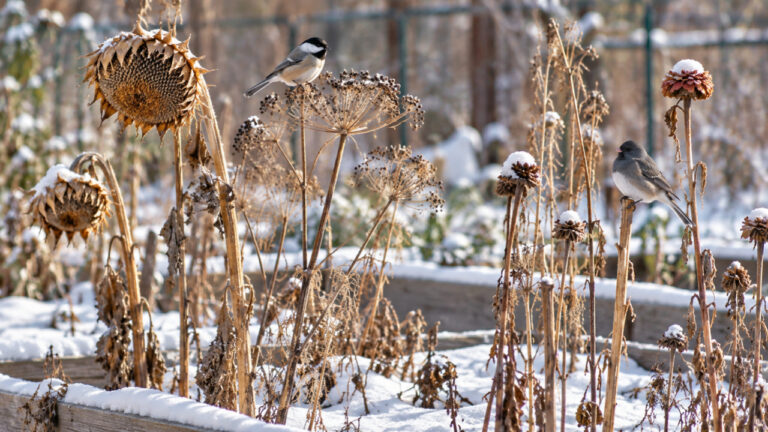
I keep more than fallen leaves in place for wildlife. Here are six things I leave in my vegetable garden to feed birds in winter.
If Snow Beats You to the Raking
Snow on top of leaves is not a reason to panic. Extension specialists agree that snow mold damage on home lawns is rarely serious, and infected areas usually green up, just more slowly than the rest of the grass.
In my yard, I wait for a midwinter thaw that leaves the surface dry enough to walk on, then clear what I can. Whatever stays under the snow gets raked in spring, as soon as the matted spots dry out.
Raking lifts the blades so sun and air can reach them, which slows the fungus. Any brown patches still present by late May get a crown check before I decide to overseed.
A note on fungicides. Spraying a home lawn for snow mold is not recommended, and UMass Extension notes that fungicides applied after snowmelt are ineffective. Golf courses treat preventively in late fall, but a backyard rarely needs it.
What I Am Doing Before the First Snow This Year
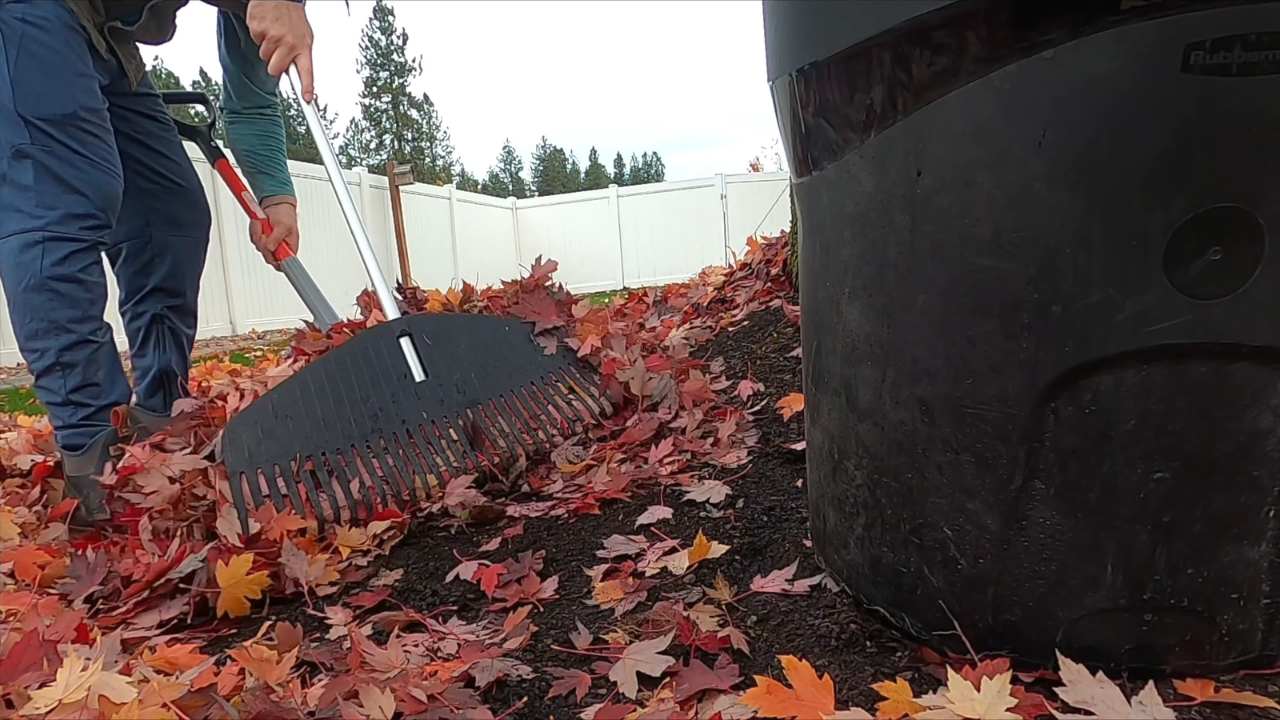
The maple next door still holds about half its leaves as I write this in mid-October. When they come down, the drifts against the fence get raked first, the scattered leaves in the open lawn get chopped by the mower, and everything I rake goes into the beds.
If you only have time for one job before snow, walk your lawn and find the spots where leaves pile deepest, usually along fences, foundations, and low corners.
Clear those, mow the rest into small pieces, and your grass will have a much better chance of greening up on time in April.