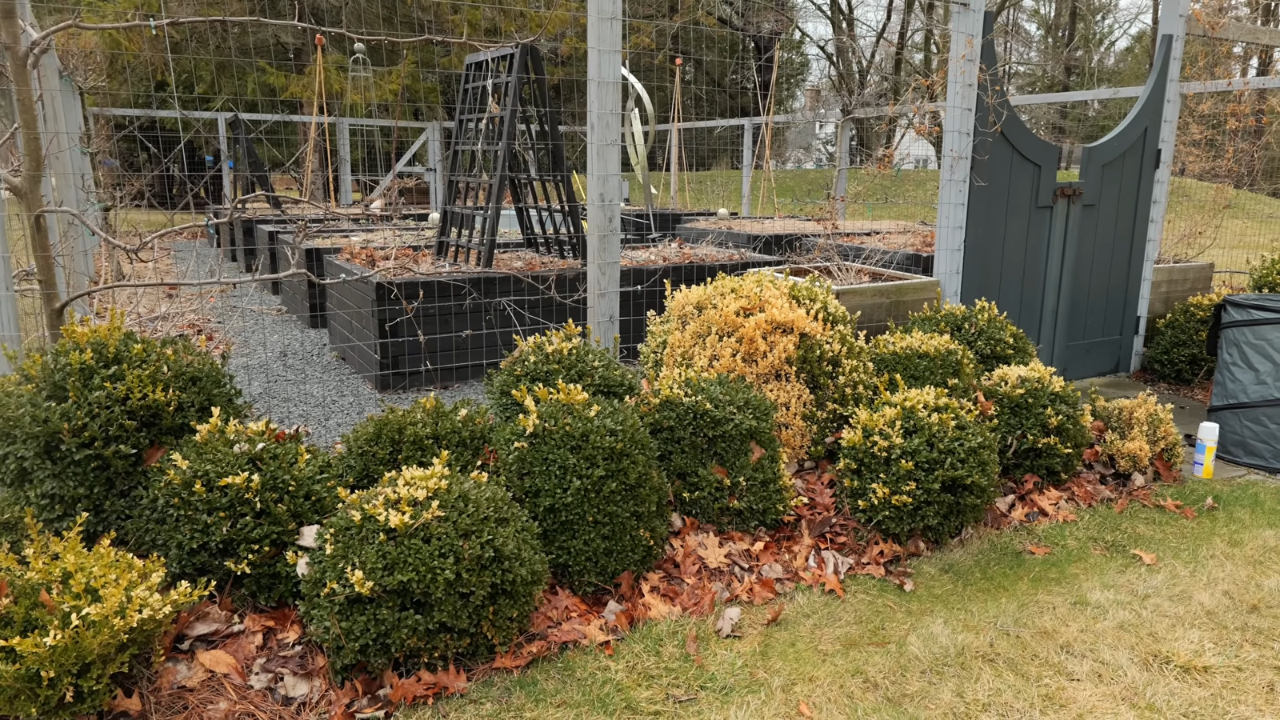
A shrub that is brown on one side and green on the other is usually worth saving. Green branches tell you the roots and main stems are still working.
The most common cause is winter burn, which dries out evergreen foliage on sunny, windy days while the ground is frozen and the roots cannot pull up water.
My advice is to slow down. Do not reach for the pruners in March, and do not dig the shrub out. Test the brown branches first, wait for new growth, and then cut only what is truly dead.
Why Only Part of Your Shrub Turned Brown
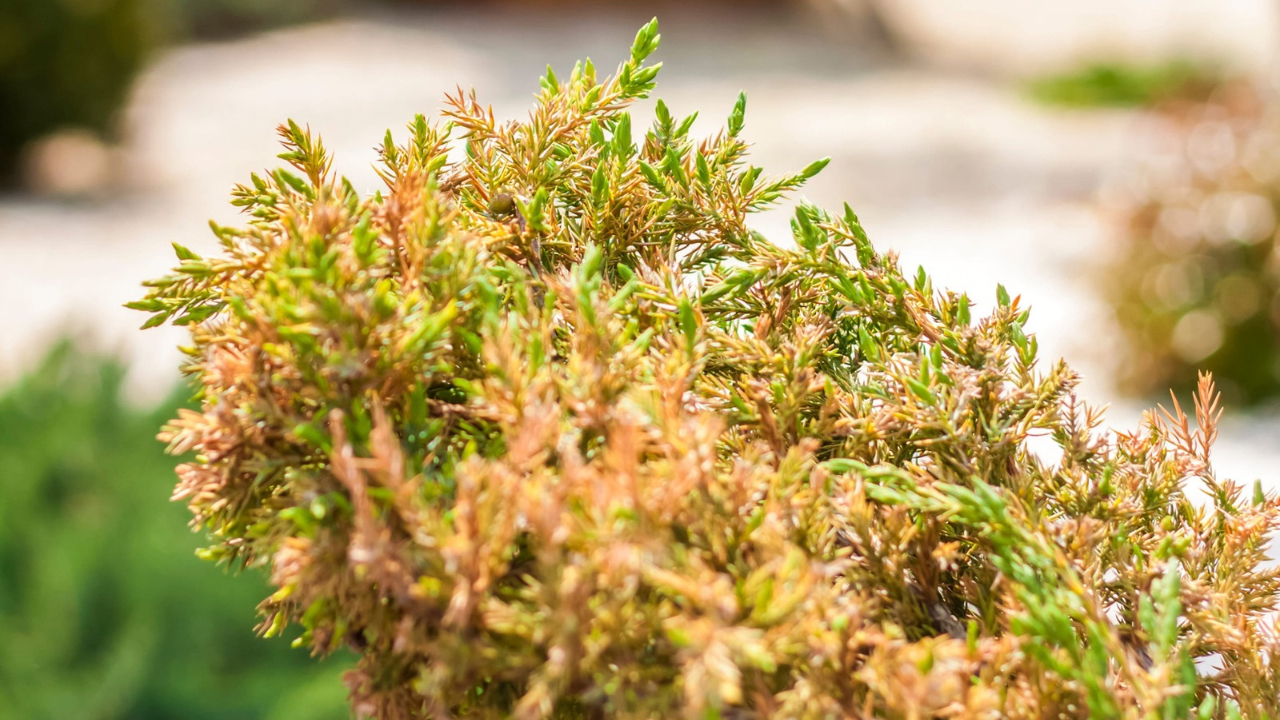
Winter burn happens when evergreen leaves or needles lose more water than the roots can replace. On a bright January afternoon, the foliage warms up and gives off moisture, but the soil is frozen, so nothing comes back up.
The University of Wisconsin guide to winter burn explains that browning starts at branch tips, moves inward and shows up as snow melts, so read it, as I did.
The damage is uneven because the weather hits your shrub unevenly. Look at where the brown sits.
- South, southwest and west sides get the most sun and wind, so they brown first.
- Lower branches that spent winter under snow usually stay green, because snow shields them.
- Outer tips brown before inner stems, so a branch can look dead and still be alive near its base.
If your shrub matches that pattern, winter is the likely cause.
Test Each Brown Branch Before You Cut Anything
You need only a fingernail or a small pocketknife for this check, and most shrubs take a few minutes.
- Scrape a spot of bark about the size of your little fingernail near the tip of a brown branch.
- Look underneath. Green, moist tissue means that part is alive. Brown or gray, dry tissue means that spot is dead.
- If the tip is dead, move 3 or 4 inches toward the main stem and scrape again. Keep going until you find green or reach the trunk.
- Peel the scales off a few buds, or slice one in half. A green center means the bud can still leaf out.
Tie a twist tie where the green begins on each branch. Illinois Extension describes the same twig and bud tests for evergreens. Your markers show exactly where to cut later.
Rule Out Problems That Look Like Winter Burn
Compare the pattern on your plant with the table below before you settle on winter burn.
| Cause | Where the brown shows | Main clue |
| Winter burn | Sunny, windy side | Parts under snow stay green |
| Road salt | Side facing the road | Same damage height on several plants |
| Normal needle drop | Inside of the plant | Appears in fall, outer growth stays green |
| Boxwood blight | Boxwood leaf spots | Dark stem streaks, fast leaf drop |
| Voles or rabbits | One whole branch | Chewed bark near the base |
Iowa State notes that deicing salt injury on evergreens is worst on the side nearest the road. Inner browning on arborvitae in fall is usually seasonal needle drop and needs no treatment. Boxwood blight is the serious one.
The University of Wisconsin boxwood blight page warns that plants can lose every leaf within days, so bag suspect boxwood, skip the compost pile and send a sample to your state diagnostic lab.
When to Prune and How Far Back to Cut
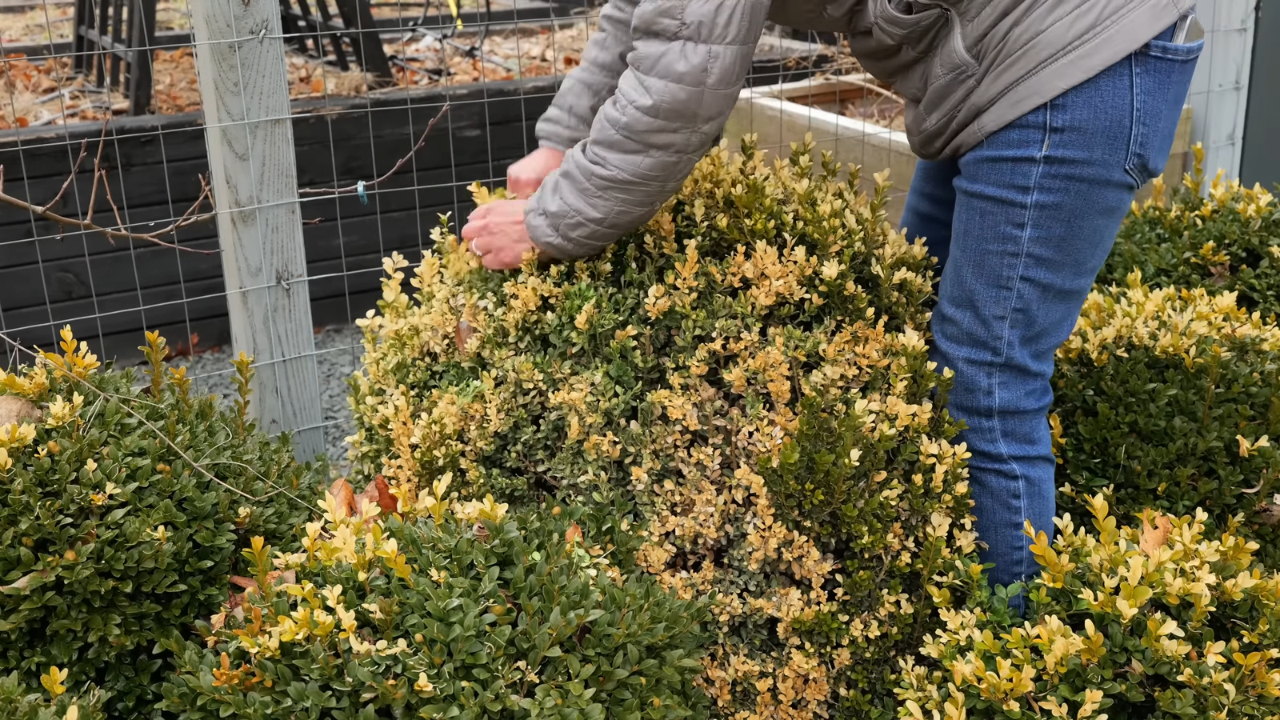
Wait for new spring growth before you cut. Live buds behind brown foliage often leaf out later than you expect, and a March cleanup can remove branches that would have recovered. In zone 5, evergreens usually push new growth in May. In zone 7 and warmer, it can start in April.
Snow can also leave arborvitae branches bent even when the foliage stays green. If your shrubs have lost their shape, see how to help arborvitae recover after snow.
Cut each dead branch back to a live side branch or green bud at your marker. Use hand pruners, not hedge shears. University of New Hampshire Extension advises against shearing damaged evergreens because shearing strips the newest buds.
Pines, spruces and firs do not sprout new shoots from bare wood. A branch cut back to a stub with no green needles or buds will stay bare, so give these trees about one extra month before you call a branch dead.
Skip pruning in late summer and early fall, since fresh growth will not harden before cold weather.
Help the Green Branches Carry the Shrub
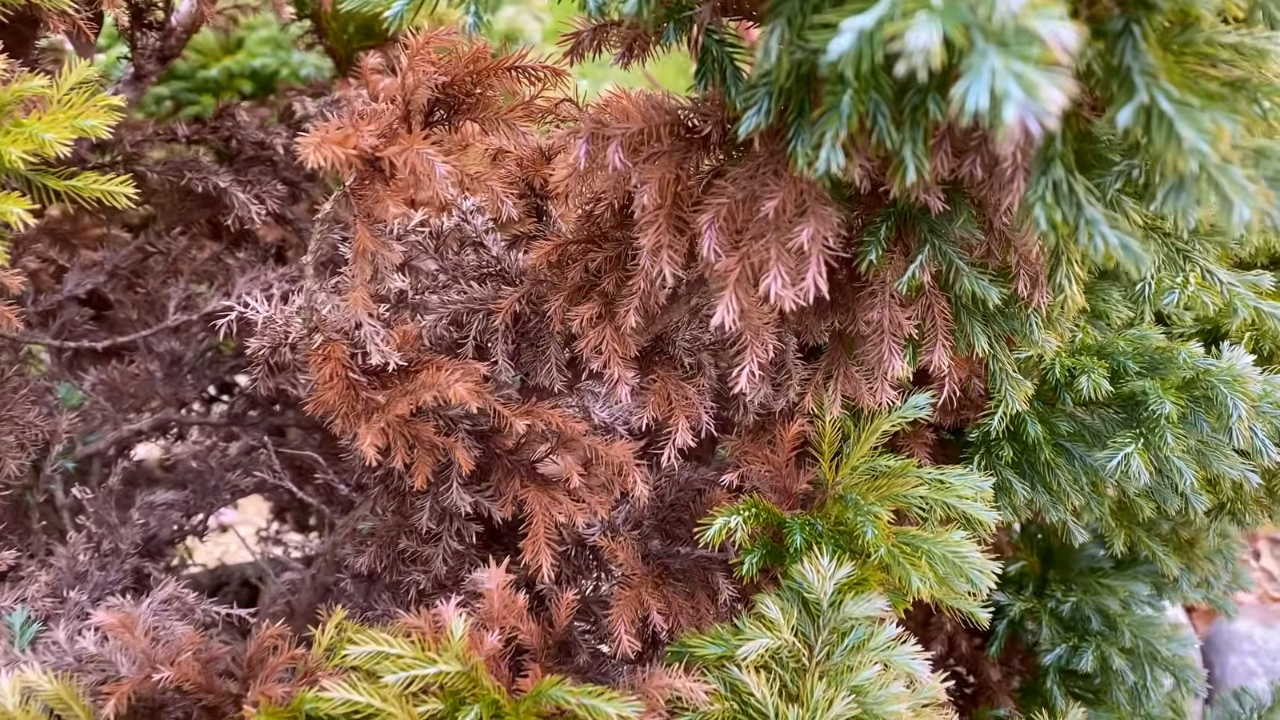
Once the dead wood is gone, the green branches have to fill the gaps. Wisconsin Extension says damaged areas typically fill in after a couple of growing seasons, and your job is to keep stress low.
- Water about 1 inch per week in dry spells, and up to 2 inches for shrubs planted in the last year or two.
- Keep 2 to 3 inches of mulch over the root zone, pulled back from the stems, as explained in how deep mulch should really be.
- Fertilize lightly or not at all, because a stressed shrub cannot use a big dose of nitrogen.
- Leave the lopsided shape alone, since new growth will even it out.
- Check the base of any dead branch for chewed bark, a sign of voles.
If the shrub still looks thin by midsummer, be patient. Recovery takes seasons, not weeks.
If Your Shrub Is Different
Deciduous shrubs such as lilac or forsythia drop their leaves anyway, so winter burn does not apply. Use the scratch test on their twigs, and wait until neighbors of the same kind leaf out before you judge. A shrub with no green under the bark on any branch is unlikely to recover and should be replaced.
Choose a replacement suited to the spot. A deciduous shrub handles a windy south wall better than a boxwood or yew, and the fall planting window is covered in what you can still plant in October.
Did You Know?
Dwarf Alberta spruce is one of the slowest evergreens to bounce back from winter burn. New Hampshire Extension notes that some recover slowly or not at all, while other evergreens hide the damage within a season of new growth.
View this post on Instagram
Stop It From Happening Again This Winter
Prevention starts in fall, and early November is not too late in most of the country. Water evergreens deeply every week until the ground freezes, because a shrub that goes into winter dry has less moisture to spare. Lay a soaker hose along the drip line, the outer edge of the branches, instead of running a sprinkler.
For shrubs on an exposed south or west side, build a burlap windscreen instead of a wrap. Wisconsin Extension recommends burlap, canvas or snow fencing on stakes 4 to 5 feet tall, about 2 feet outside the drip line, with the top left open.
Wrapping burlap tight around the plant traps ice and moisture. Antidesiccant sprays break down quickly and often fail, so I would spend that money on a soaker hose.
Some Common Questions
1. Will the brown needles turn green again?
No. Burned foliage stays brown and drops by midsummer. New green comes from buds, not old needles.
2. Why did my newest shrub brown worse than the older ones?
Recent transplants have shallow roots that cannot supply enough water in winter. Plant evergreens in early spring or from August through September so roots settle in before the ground freezes.
3. Is winter burn contagious?
No. Weather causes it, so it cannot spread between plants. Dead tissue can attract fungi, though, so remove confirmed dead wood once new growth appears.
4. Should I feed my shrub in fall to make it stronger?
Avoid quick release, high nitrogen fertilizer in late summer and fall. It pushes tender growth that freezes easily. A soil test tells you whether the shrub needs anything.
5. When should the burlap screen come down?
Take it down promptly in spring, once the snow melts and hard cold has passed, so it does not shade new growth.
What to Do This Week
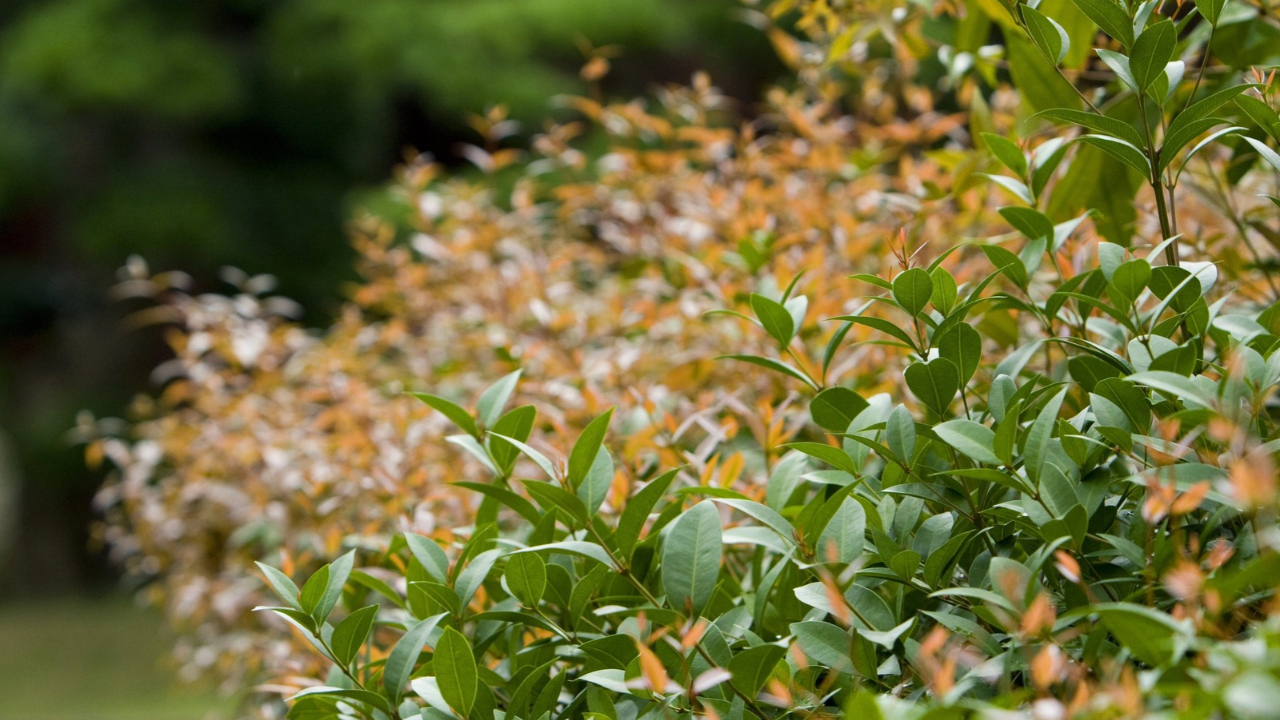
Your next step depends on the season. If it is fall where you are, give your evergreens a slow, deep soak this week and check that the mulch sits 2 to 3 inches deep and clear of the stems.
Set stakes for a burlap screen before the ground freezes, because driving them into frozen soil is nearly impossible.
If you are reading this in spring, go out with a fingernail and a handful of twist ties, scratch every brown branch and mark where the green begins. Then leave the pruners in the shed until new growth shows you what survived.